Leave Your Message

10 Tips for Buying Mens Jogger and Track Pants in Bulk

Bulk buying joggers and track pants can look simple on a spreadsheet. The real test comes when cartons arrive: fabric feels thinner than the approved sample, sizes vary, or popular colors sell out first. For retailers, distributors, and private-label buyers, careful checks before placing an order can protect both margins and customer trust.

The opportunity is substantial, but market growth should not be mistaken for guaranteed demand. Grand View Research valued the global sports apparel market at USD 203.3 billion in 2023 and forecast a 5.3% compound annual growth rate from 2024 to 2030 in its Sports Apparel Market report. That broad category includes more than joggers, so buyers still need to validate demand with their own sales data. Trends are useful. They are not a purchase plan.

This guide shares 10 practical tips for sourcing Men's Jog&Track Pants in bulk, from checking fabric composition and stitching to comparing minimum order quantities, size ranges, samples, and delivery timelines. Ask suppliers how they maintain consistency between production runs. Request measurements, not just labels. A medium can fit very differently across factories. Also calculate the full landed cost, including packaging and freight, before comparing quotes. One point deserves reflection: the lowest unit price may become expensive if quality problems slow reorders. Use these checks to build a buying decision around evidence, not a polished catalog photo.
10 Tips for Buying Mens Jogger and Track Pants in Bulk

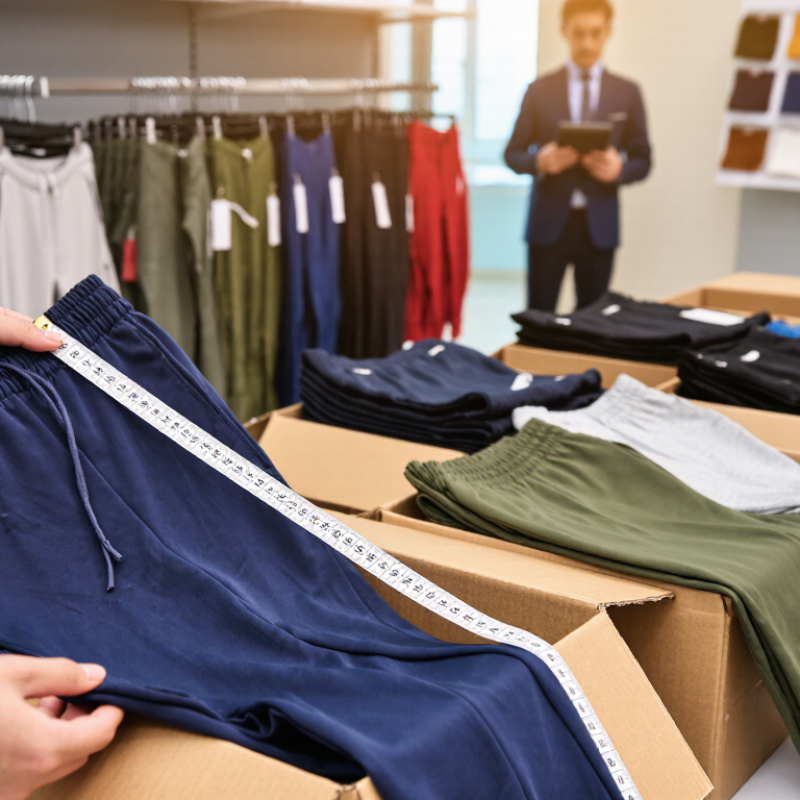
Define Fabric Weight: Measure GSM Using ASTM D3776

For bulk joggers and track pants, GSM means grams of fabric per square meter. It helps buyers compare fabric weight, but it does not reveal softness or durability by itself. Textile Exchange’s Materials Market Report 2024 estimates global fiber production reached 124 million tonnes in 2023. At that scale, clear, repeatable fabric specifications matter. ASTM D3776/D3776M provides methods for determining textile mass per unit area, with procedures suited to different fabric forms.

Tip: Ask the mill to test production-lot samples, not just a showroom swatch. Confirm the sample area, test method, and agreed GSM tolerance in writing. For example, a 280 GSM fleece and a 280 GSM interlock may feel quite different. Construction matters. Keep a sealed reference swatch beside the report, so incoming checks have a physical comparison.

A practical buying check is to compare measured GSM with the approved sample before cutting begins. Request results from multiple rolls when the order is large; one roll may not represent the shipment. ASTM measurement improves consistency, but it cannot replace checking stretch recovery, shrinkage, or hand feel. I have seen teams focus too heavily on one number. It is an easy mistake. Use GSM to control weight, then assess the fabric under the conditions your customers will actually wear it.

10 Tips for Buying Mens Jogger and Track Pants in Bulk - Define Fabric Weight: Measure GSM Using ASTM D3776

Tip Buying Dimension Practical Guidance What to Check in Bulk
1 Define the intended use Choose fabric weight and construction for the expected conditions. Lightweight styles may suit warm-weather training, while heavier fabric can provide more coverage and warmth. Record the intended season, activity, and target wearer before comparing samples.
2 Set an indicative GSM target As a starting point—not a universal standard—consider about 180–240 GSM for lighter styles and 240–320 GSM for midweight styles. Lining, knit structure, and finish affect the feel and performance. State a target and acceptable tolerance in the purchase specification; confirm the range against approved samples.
3 Request an ASTM D3776 test ASTM D3776/D3776M provides test methods for determining fabric mass per unit area. Ask the testing provider to identify the method used and report the result in g/m² (GSM). Check that the report identifies the fabric sample, result, test method, and test date.
4 Understand the GSM calculation GSM equals fabric mass in grams divided by sample area in square metres. For example, a 2.40 g specimen measuring 100 cm² corresponds to 240 g/m². Confirm that the specimen area and units are stated; do not compare results with different or unclear sampling bases.
5 Compare like with like Fabric construction, finishing, moisture, and sampling can affect measured mass. Compare fabrics with similar construction and use the same agreed testing approach. Test representative production fabric, not only a hand-picked development swatch.
6 Check fiber content and construction Polyester, cotton, elastane, and their blends can differ in drying, stretch, hand feel, and care needs. GSM alone does not describe these properties. Match the label and purchase specification to the verified fiber content and fabric construction.
7 Assess performance after care Washing can change dimensions, appearance, and hand feel. Review applicable care and performance tests for the intended product and market. Approve samples after the agreed wash procedure and compare them with the original sample.
8 Check fit and size grading Joggers and track pants need consistent waist, hip, rise, inseam, cuff, and pocket dimensions across the size range. Approve a measurement specification and tolerance for each size, then inspect bulk production against it.
9 Review construction details Inspect seams, waistband elastic, drawcord attachment, pocket reinforcement, cuffs, and closures. These details influence durability and wearer comfort. Use an approved reference sample and a documented inspection plan for the production lot.
10 Confirm bulk consistency before shipment Agree in writing on fabric composition, GSM target and tolerance, color, measurements, workmanship, packaging, and acceptance criteria before placing the order. Request production-lot test results and representative inspection records before shipment approval.

Note: GSM ranges shown are indicative sourcing examples, not ASTM requirements or universal product specifications. Set targets according to the garment design and verify them on representative fabric.

Set Fit and Size Runs with ISO 8559-1 Body Measurements

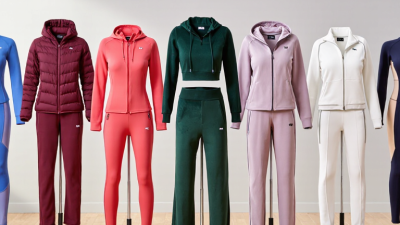
For bulk jogger and track pants, build the size run from body measurements, not guesswork. ISO 8559-1:2017 standardizes how apparel-related body dimensions are defined and measured; it does not prescribe finished garment sizes. Record waist, hip, and inside-leg measurements consistently, then compare them with the garment’s finished measurements and intended ease. Fit is data. A waistband that looks generous on a flat sample may feel restrictive when seated or moving.

Use population data as a reference, not a buying formula. The U.S. National Center for Health Statistics reported a mean waist circumference of 40.6 inches for adult men in 2015–2018 (Data Brief No. 360). That figure describes a population average, not your customers or a recommended trouser size. Group orders should reflect the actual market, customer records, and return patterns where available. Set a size run with enough depth in common sizes, but test edge sizes too. One fit sample is not enough. Check waist recovery, thigh room, and inseam after wear and washing. Even careful measurement has limits: posture, fabric stretch, and measuring technique can shift results. Document those assumptions before placing a large order.

Assess Fabric Durability Using ASTM D4966 Martindale Abrasion Testing

When buying men’s joggers and track pants in bulk, assess abrasion resistance alongside fit and price. ASTM D4966 uses a Martindale tester to rub fabric repeatedly against an abrasive surface under controlled conditions. The lab records cycles and evaluates fabric breakdown or appearance, depending on the chosen endpoint. Results are not directly comparable unless test settings and fabric construction match. A high score is not a guarantee. Knees and seat areas can still wear differently in everyday use.

Tips: Request the full ASTM D4966 report, including cycle count, endpoint, and test conditions. Compare samples of the same fabric weight and construction. Rub or flex the knee and seat panels by hand, too. Small details matter.

Use abrasion results as one screening tool, then check seams and laundering performance before placing a large order. WRAP’s 2012 Valuing Our Clothes report estimated that extending a garment’s active life by nine months could reduce its carbon, water, and waste footprints by 20–30%. That figure is not a jogger-specific guarantee, but it shows why durable fabric can matter beyond replacement costs. Ask suppliers to provide representative samples; bulk production may not feel exactly the same.

Verify Care Instructions Across ISO 3758’s 5 Treatment Categories

When buying men’s jogger and track pants in bulk, verify care instructions against ISO 3758:2023. It organizes care symbols into five treatment categories: washing, bleaching, drying, ironing, and professional textile care. Check every category, not just the wash temperature. A cotton-polyester body, brushed fleece, and printed logo may react differently to heat or bleach. Five categories. Ask for the actual label artwork and compare it with the garment’s fiber content and construction.

Request pre-production samples and wash them as the label directs. Inspect the knees, cuffs, waistband, and any print for shrinkage, twisting, fading, or cracking. A spreadsheet can miss those details. I would not assume matching fabric names mean matching care needs. WRAP’s 2012 report, Valuing Our Clothes, estimates that extending active garment use by three months could reduce carbon, water, and waste footprints by 5–10%. That is an estimate, not a guarantee for every product. Still, accurate care guidance helps buyers and wearers avoid preventable damage. Ask suppliers to confirm that labels remain consistent across sizes, colors, and production batches.

10 Tips for Buying Men’s Jogger and Track Pants in Bulk

Verify each product’s care label against your intended washing and finishing processes. ISO 3758 groups care symbols into five treatment categories.

Two checks for each category

  • Washing: Confirm the maximum wash temperature; check whether the label permits machine or hand washing.
  • Bleaching: Check whether bleaching is allowed; confirm any restriction on bleach type.
  • Drying: Confirm whether tumble drying is allowed and at what setting; check any natural-drying instructions.
  • Ironing: Confirm the maximum ironing temperature; check for restrictions such as “do not iron.”
  • Professional textile care: Check whether professional dry cleaning or wet cleaning is specified; confirm any process restrictions.

The chart counts suggested checks in this buyer checklist, not ISO requirements. Confirm the actual care labels on production samples and bulk orders before purchase.

Plan Bulk Costs and Labels: FTC Rules Require Fiber Content by Weight Order

When ordering joggers or track pants in bulk, request the verified fiber breakdown before approving labels. In the United States, covered textile garments generally must list generic fiber names and percentages by weight, in descending order. A fabric containing 60% cotton, 35% polyester, and 5% elastane would list those fibers in that order. Small details matter.

Compare the label copy with the fabric specification, not just a sales sheet. Ribbed cuffs, pocket bags, and contrast panels may use different materials, so ask whether the stated percentages describe the garment’s overall fiber content. Fibers below 5% are generally grouped as “other fiber,” with exceptions. Check the current Federal Trade Commission guidance or consult a qualified compliance professional when a blend is unusual. One easy mistake is approving a sample label before the final fabric mix is confirmed.

Build label checks into your purchase schedule. Ask the supplier for test records or a written composition declaration, then keep the approved version with your order documents. Review required business identification and country-of-origin information too; fiber content is only part of the label. Labels should match the finished goods, including replacement runs. It can feel fussy. But correcting thousands of sewn-in labels after production is far harder than checking a percentage before cutting.