How to Choose Womens Sun Protection Clothing for Your Brand
Choosing sun-protective clothing for a women’s brand is not just a fabric decision. It shapes comfort, fit, and whether customers will reach for a garment on a bright, hot day. In a Women's Sun-Proof Series, practical choices matter: a UPF-rated fabric, a breathable weave, sleeves that stay in place, and a collar that protects the back of the neck. Small details show up outdoors.
UPF describes how much ultraviolet radiation a fabric allows through. A higher rating can offer stronger protection, but the garment still needs to feel wearable. Consider a lightweight shirt tested for UPF performance, then check how its fabric behaves when damp, stretched, or layered. Fit matters, too. A close-fitting sleeve may ride up; a loose one may feel cooler but shift during movement. Neither detail should be guessed from a studio photograph.
A named expert quotation cannot be responsibly supplied without a verifiable source, so this introduction does not invent one. That is worth acknowledging. Brands should confirm any expert wording, fabric claims, and testing details before publication. The product brief should also reflect real wear: a customer walking to work, sitting beside a sunny window, or packing for a weekend trip. Sun protection has to fit ordinary life. Sometimes the first sample misses the mark. That is useful feedback, not a failure.

Use the WHO UV Index: Protection Is Recommended at Level 3 and Above
The WHO UV Index is a useful starting point when planning a women’s sun-protection range. At level 3 and above, protection is recommended, and stronger readings call for extra care outdoors. Check it daily. The index describes local UV intensity, not the protection a garment provides.
Turn that guidance into practical clothing for real routines: walking to work, gardening, or sitting beside a pool. Coverage matters. Long sleeves, higher necklines, and cap-compatible hoods can reduce exposed skin, while breathable fabric helps in warm weather. Clothing is one layer of protection, alongside shade and sunscreen on uncovered skin.
Fabric protection cannot be judged by color or appearance alone. Weave, stretch, moisture, and wear may affect performance, so avoid making claims without suitable testing. Ask suppliers for relevant UPF test results, and check how the fabric performs after washing. There is a trade-off: dense fabric may offer more coverage but feel too warm for daily use. Try garments in motion and in heat; a neat sample-room fit can still feel restrictive outdoors.
Select Fabrics and Verify UV Protection with AATCC TM 183 Testing
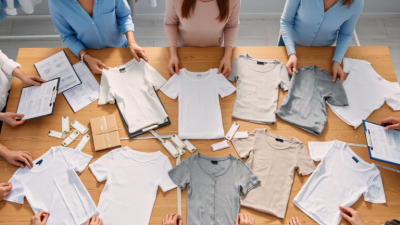
Women’s sun-protection clothing starts with fabric choices, but fiber names alone cannot predict UV performance. A tightly woven polyester or nylon may limit UV transmission, while a lightweight, open-knit fabric can let more radiation through. Check the actual construction: hold a swatch toward daylight and look for visible gaps. It is a useful screening step, not a substitute for testing. Small details matter.
AATCC TM 183 measures UV transmission through fabric and can support calculation of its Ultraviolet Protection Factor (UPF). Submit representative samples, including different colors and fabric weights, to a qualified laboratory. Test the material in its intended condition; stretching, moisture, and wear can affect protection. The result applies to the tested specimen, not automatically to every finished garment. Be cautious about treating one passing swatch as proof for an entire range.
Tips: Keep records of fabric composition, color, weight, and test results. Ask whether samples were tested in the condition relevant to wear. Recheck after meaningful changes to yarns, dyes, or finishing. Lab results add confidence, though they do not capture every real-world use.
Design Coverage and Fit Around Your Target UPF Rating
How to Choose Womens Sun Protection Clothing for Your Brand
Design coverage and fit around the target UPF rating. A UPF 50+ fabric transmits less than 2% of UV radiation under test conditions. AATCC TM183 measures ultraviolet transmission through fabric, while ASTM D6603 provides guidance for labeling UV-protective textiles. Treat the number as a tested fabric result, not a promise about every finished garment.
Fit changes coverage. A sleeve that pulls back when the wearer reaches for a bag can expose the wrist. Test garments on different body shapes, with arms raised and seated, not only on a dress form. Check stretch panels carefully: tension can thin the fabric and alter its protective performance. Small details matter.
Build in coverage without making movement miserable. Consider a higher neckline, longer sleeves, and a back panel that stays put when bending. Dense fabric can help, but heavy material may feel hot in summer. There is no perfect trade-off. Ask a qualified laboratory to test the finished garment using a recognized method, and document the test conditions. Wetness, wear, and laundering can affect results, so avoid implying that a laboratory rating guarantees identical protection in every real-world situation.
Check Labels and Claims Against ASTM D6603 Requirements
When choosing women’s sun protection clothing, review every UV claim against ASTM D6603, the standard guide for labeling UV-protective textiles. Treat it as a labeling reference, not proof that a garment has been independently tested. Keep the test report beside the proposed hangtag. Check that the stated UPF rating matches the evidence and that the wording does not promise more protection than the garment provides.
Look closely at coverage and care information. A long-sleeved top may leave the neck or hands exposed, so labels should not imply full-body protection. Explain how washing and wear may affect performance when the test evidence or care guidance calls for it. Be precise. Avoid vague phrases such as “blocks all rays.” A clear UPF number, coverage description, and practical care instructions give shoppers more useful information. Check the current edition of the guide before approving final artwork.
Then inspect a sample, not just the label. Stretch the fabric across the shoulder and check whether seams, cuffs, or openings change the covered area. Compare the garment’s construction with the claims and supporting records. Small details matter. A tidy tag can still leave questions about fit or exposed skin. That is worth revisiting. Keep dated test documents and label versions together, so later production changes do not quietly outgrow the original claim.