Leave Your Message
- Phone
- E-mail
- Skype
- Wechat

- Whatsapp
Women's Tracksuits sit at the intersection of comfort, performance, and everyday style. For brands, choosing the right set means looking beyond color trends. Fabric hand-feel, fit consistency, and construction details shape whether customers reach for a tracksuit repeatedly—or leave it on the hanger.
The opportunity is substantial, but the numbers need context. Grand View Research estimated the global sports apparel market at about US$213.1 billion in 2023 and projected continued growth through 2030. This category includes far more than tracksuits, so it is a market signal, not a tracksuit sales forecast. That distinction matters. Nike co-founder and track coach Bill Bowerman famously said, “If you have a body, you are an athlete.” His words point to a broad audience, but they do not replace product testing or customer research.
A practical buying process starts with the wearer and the intended use. Compare brushed fleece against lightweight knit; check zipper smoothness, pocket depth, waistband recovery, and seam comfort. Ask suppliers for fabric composition, size specifications, and test documentation, then assess samples across several body types. Small details show up fast: a twisting side seam, a cuff that rides up, or a pocket that cannot hold a phone. No sample is perfect. Record the shortcomings, request revisions, and verify the next production sample before committing. This guide explains how to weigh those choices and select Women's Tracksuits that suit your brand’s quality level, customer, and price point.
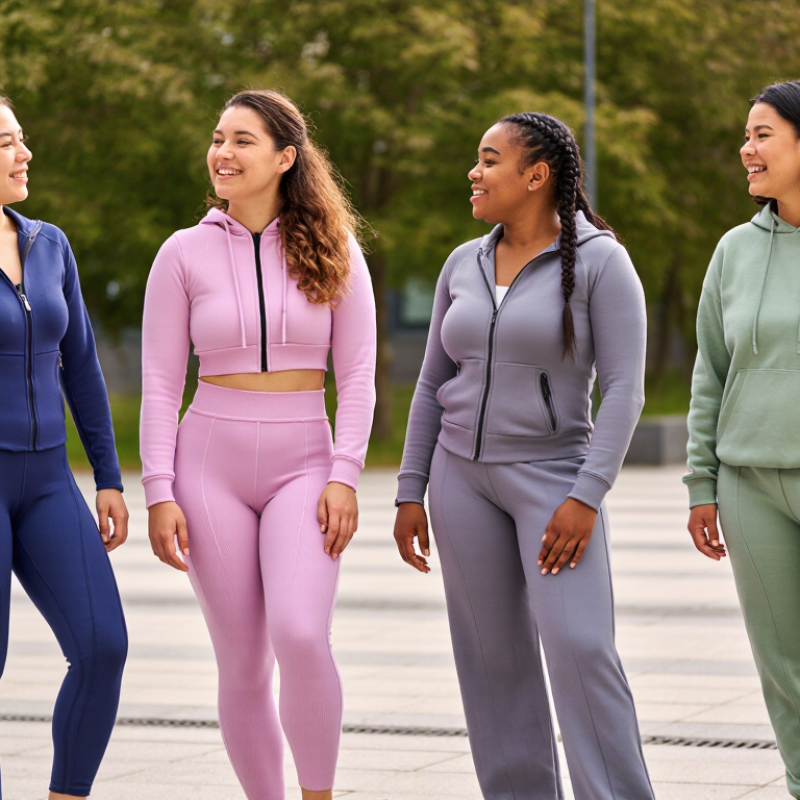
Before choosing women’s tracksuits, define who will wear them and where. A commuter may need a clean silhouette and pockets that secure a phone. A team member may prioritize stretch, warmth, and easy movement. Ask potential customers about their routines, preferred fits, and common sizing frustrations. Some details surprise you. A short survey can reveal whether buyers want matching sets or separates. Use those answers to shape your size range, colors, and price point rather than relying on assumptions.
Translate those needs into specific product requirements. For cool-weather training, consider a soft, midweight fabric with a brushed interior. For travel or daily wear, lighter fabric and low-bulk seams may feel more practical. Check that waistbands stay comfortable when seated and cuffs do not restrict movement. Fabric labels and sample measurements help, but wear tests matter too. Ask testers to walk, stretch, and wash samples according to care instructions. I once underestimated how much a stiff waistband affected comfort; the design looked right on a hanger, but not in motion. Record feedback and revise the specification before ordering.
Tips: Keep a simple checklist for fit, fabric weight, pocket depth, and care needs. Compare samples on different body types. Note trade-offs honestly; a softer fabric may pill sooner, and no single fit suits everyone.
| Target Audience | Primary Use | Fit and Silhouette | Fabric and Weight | Useful Design Features | Sizing and Product Checks |
|---|---|---|---|---|---|
| Everyday casual wearers | Errands, travel, lounging, and casual outings | Relaxed fit with a comfortable rise and adjustable waist | Soft cotton-polyester fleece or French terry; medium-weight options are suitable for year-round layering | Full-zip or pullover top, side pockets, ribbed cuffs, and easy-care fabric | Check sleeve and inseam lengths across the size range; test pocket depth and waistband recovery after washing |
| Fitness and warm-up customers | Warm-ups, cool-downs, walking, and light training | Regular or athletic fit that allows a full range of motion | Lightweight polyester or polyester-elastane knit; moisture-managing construction can help move perspiration away from the skin | Breathable panels, secure pockets, smooth seams, and a full-length zip for easy layering | Check stretch and recovery, seam comfort during movement, and whether the fabric becomes transparent when stretched |
| Cold-weather commuters | Outdoor travel, pre- and post-activity layering, and cooler days | Roomier cut that accommodates a base layer without restricting movement | Brushed-back fleece or a denser knit; fabric weight should suit the intended climate and layering needs | High collar, covered or secure pockets, adjustable hood or hem, and ribbed cuffs | Assess warmth, bulk under outerwear, zipper operation, and ease of movement while seated or walking |
| Style-focused casual shoppers | Coordinated outfits and relaxed social wear | Contemporary options such as a cropped jacket, tapered leg, or straight-leg pant | Interlock, ponte, or smooth cotton-blend knit; select a finish that holds its shape and suits the desired drape | Coordinated top and bottom, clean seam details, practical pockets, and considered color matching | Review garment measurements and fit photos; check that top and bottom color lots match consistently |
| Customers seeking extended size options | Comfortable everyday wear across a broad range of body shapes | Fit developed across the size range rather than simply scaled up from one sample size | Soft, opaque knit with enough stretch for comfort and reliable recovery | Adjustable waistband, functional pockets, and closures positioned for comfortable wear | Fit-test multiple sizes; review grading, garment length, waistband comfort, and ease at hips, thighs, and upper arms |
| Low-maintenance shoppers | Frequent wear and regular home laundering | Comfortable everyday fit with durable construction | Washable knit selected for dimensional stability and color retention; care performance depends on fiber blend and finishing | Reinforced stress points, colorfast trims, and care instructions suited to routine washing | Conduct wash tests for shrinkage, pilling, color transfer, and seam twisting before confirming the product specification |
Fabric feel, warmth, and performance vary by fiber blend, knit construction, and finishing. Confirm the final fit and care performance with physical samples and wash testing.