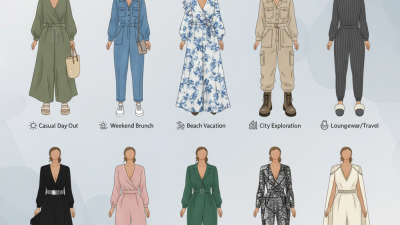
Sourcing Women’s Jumpsuits wholesale requires more than finding attractive designs at low prices. Buyers must assess fabric composition, size grading, factory capacity, minimum order quantities, and delivery reliability. Public reports rarely isolate the jumpsuit category, which makes careful interpretation essential. The McKinsey and Business of Fashion State of Fashion 2024 report projected only 2–4% global fashion growth, increasing pressure on inventory decisions and wholesale margins. Small errors can become expensive.
Material choices deserve close attention. Textile Exchange’s 2024 Materials Market Report recorded global fiber production at approximately 124 million tonnes in 2023. Polyester represented about 57% of total output. This matters because a soft, fluid jumpsuit may depend on synthetic fibers, while buyers increasingly request recycled or lower-impact alternatives. Dana Thomas, fashion journalist and author of Fashionopolis, warned, “Fast fashion is not free. Someone, somewhere is paying.” Her statement reminds wholesalers to examine labor, material, and production claims rather than trusting polished product pages.
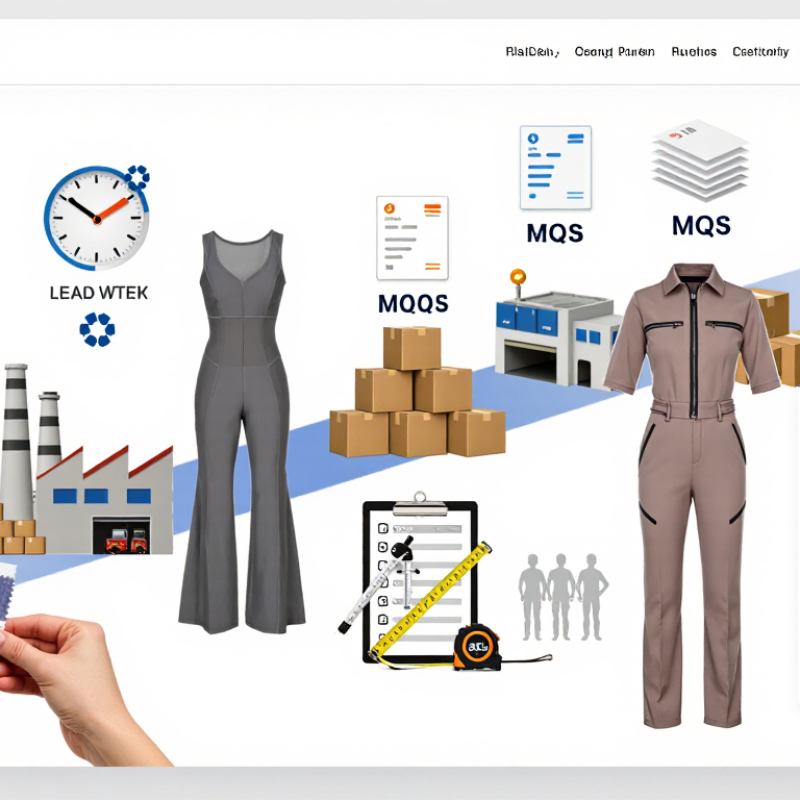
A reliable sourcing plan begins with verified samples. Check stitching around the waist, zipper strength, pocket depth, fabric recovery, and size consistency. Request a detailed measurement chart. Confirm the actual MOQ, lead time, packaging, and landed cost. Supplier audits and traceable certifications add confidence, but paperwork still needs verification. There is no perfect supplier. My biggest concern is usually not the sample; it is whether bulk production matches it. This guide explains how to compare manufacturers, negotiate practical terms, and build a safer wholesale pipeline for Women’s Jumpsuits without sacrificing commercial appeal or responsible purchasing.
How to Source Womens Jumpsuits Wholesale?
Define Your Womens Jumpsuit Wholesale Requirements
Before contacting suppliers, write a measurable product brief. Define the customer, season, retail price, target cost, and order quantity. Specify the silhouette: wide-leg, fitted, utility, or relaxed. Record bust, waist, inseam, rise, and grading preferences. A vague “modern fit” creates expensive revisions. It is not enough. The 2024 NRF and Appriss Retail report estimated that 16.9% of U.S. retail sales were returned. Fit deserves commercial attention. For jumpsuits, request a measurement chart, tolerance range, and model fitting video. Include closure type, pocket depth, lining, opacity, and shrinkage limits.
Fabric decisions should be equally specific. State fiber content, GSM, stretch percentage, colorfastness, pilling target, and care instructions. Textile Exchange’s Materials Market Report 2024 recorded 124 million tonnes of global fiber production in 2023. It projects output could reach 160 million tonnes by 2030. That growth makes material traceability more important, not decorative. Ask for fiber certificates, test reports, and lot consistency. A soft swatch can still fail after washing. Buyers often approve appearance before checking recovery. That mistake is easy to repeat.
Set wholesale requirements around cash flow, not optimism. List the acceptable MOQ, sample cost, production lead time, inspection point, packaging dimensions, and payment milestones. Request a pre-production sample in the final fabric. Compare it against your brief. If the sample misses the inseam or wrinkles at the zipper, record the defect precisely. Do not hide uncertainty. A small pilot order may reveal demand, grading, and return problems before a larger commitment. Leave room for correction.

Finding reliable womens jumpsuit wholesale suppliers starts with evidence, not polished photos. I request a current catalog, fabric details, size charts, and production capacity. A supplier should explain fabric weight, stretch percentage, seam finishing, and shrinkage after washing. Ask for a sample in two sizes. Real garments reveal more than showroom images. Check stitching at the waist, zipper movement, pocket depth, and color consistency under daylight. Small details often predict customer returns.
I compare at least three suppliers using the same questions. I request business registration details, production information, minimum order quantities, lead times, and payment terms. I also verify references from recent wholesale buyers, rather than trusting testimonials on one website. A video call can show cutting tables, packed cartons, and quality-control routines. It is not perfect proof, but unanswered questions deserve caution. Suppliers should provide accurate fiber, care, and origin labels for the target market.
Communication matters after the sample arrives. I record measurements, approved colors, stitching requirements, and packaging details in writing. Keep every promise documented. Before ordering, I ask for a pre-production sample and an inspection checklist. I once accepted attractive pricing too quickly, then discovered uneven hems across several pieces. That mistake changed my process, although I still miss details sometimes. A dependable supplier accepts reasonable questions, reports delays early, and responds with specific solutions instead of vague assurances.
How to Source Womens Jumpsuits Wholesale?
Fabric choice should match the garment’s purpose, climate, and target price. Polyester represented about 57% of global fiber production in 2023, according to Textile Exchange’s Materials Market Report 2024. It offers durability and quick drying, but it may feel less breathable. Cotton feels softer, while viscose creates fluid drape. Ask suppliers for fiber composition, fabric weight, shrinkage results, colorfastness, and pilling performance. A fabric swatch is useful, but it cannot replace testing.
Sizes deserve more than a standard small-to-large chart. Request actual measurements for bust, waist, hip, torso length, inseam, and shoulder width. A jumpsuit can fit the waist but pull across the torso. That mistake is common. The NRF reported a 14.5% retail return rate in 2023, showing why fit accuracy matters, even though the figure covers all retail categories. Compare the supplier’s grading rules with your customer data. Do not trust labels alone.
Design evaluation should include zipper placement, pocket depth, strap adjustment, seam allowance, and washing instructions. Inspect bartacks at stress points and check whether the zipper moves smoothly over the waist seam. Use pre-production samples, then apply a documented inspection plan, such as ISO 2859-1 sampling. Look for loose threads, uneven stitching, shade variation, and twisting after washing. A perfect sample may still hide inconsistent factory output. Repeat inspections. That extra cost may prevent a larger loss.
This sourcing benchmark compares practical wholesale specifications for women's jumpsuits. Fabric weight is shown in GSM, size coverage represents the number of available size grades, design variety indicates the number of core style options, and manufacturing quality is measured against a 100-point inspection score.
Compare every quote by landed cost, not unit price alone. A jumpsuit priced at $8 may become $11 after packaging, inspection, freight, and import charges. Ask for pricing at three quantities, such as 50, 200, and 500 pieces. Minimum order quantities often reduce costs, but excess stock can erase the savings. Small orders help. For a first test, negotiate a mixed-size MOQ and request one pre-production sample. Check fabric weight, zipper strength, seam finishing, and actual measurements. A spreadsheet is useful, though it will not replace touching the garment.
Shipping terms need equal attention. Under FOB, the buyer usually manages the main freight and related risks after loading. Under DDP, the supplier may arrange delivery and duties, but the price can hide weaker cost details. Request freight quotes for both air and sea options. UNCTAD’s Review of Maritime Transport 2024 states that ships carry over 80% of global merchandise trade by volume. Delays can therefore affect seasonal launches. DHL’s 2024 E-Commerce Trends Report found that seven in ten shoppers expect better delivery choices by 2030. That pressure reaches wholesale buyers too.
Returns also deserve a cost line. NRF and Appriss Retail estimated that 16.9% of U.S. retail sales were returned in 2024. Poor sizing can become an expensive problem with jumpsuits. Build a size chart from measured samples, not assumptions. I would still question a supplier offering an unusually low price. Cheap can be useful. It can also be incomplete.
When sourcing women’s jumpsuits wholesale, sample verification should happen before price negotiation becomes the main focus. Request one sample in each planned size, not only a showroom piece. Check shoulder width, rise, inseam, waist placement, and zipper movement on a real fit model. Rub the fabric gently and inspect color transfer, loose threads, seam puckering, and pocket strength. Photograph every issue beside a ruler. Touch matters. A sample can look excellent online and fail after one wash.
Turn approved details into a written purchase order. Include fabric composition, measurements, color codes, size ratios, labels, packing method, carton marks, quantity, unit price, payment schedule, and delivery window. Attach signed sample photos and a measurement tolerance sheet. Confirm local labeling and fiber-disclosure requirements before production. Ask how shortages, defects, and late shipments will be handled. Keep a small inspection allowance in the schedule. Rushing production is tempting, but cheap speed often creates expensive rework.
Supplier relationships improve when communication is regular and specific. Request weekly production updates, then record replies, photos, and agreed actions. Use an independent pre-shipment inspection when the order value justifies it. If a problem appears, describe the defect with evidence and request a dated correction plan. Stay respectful, but do not replace written terms with friendly promises. I once underestimated how quickly minor measurement changes could spread across a size run. That mistake taught me to approve every revision again. Trust grows through consistent checks, not optimism.
A practical sourcing data framework for evaluating samples, confirming wholesale orders, and managing supplier performance.
| Sourcing Stage | Evaluation Dimension | Practical Benchmark or Data Point | Verification Method | Recommended Action | Record to Keep |
|---|---|---|---|---|---|
| 1. Define the Product | Style specification | Document silhouette, neckline, sleeve type, leg shape, closure, pockets, trims, and intended season before requesting quotations. | Compare the specification with the supplier's quotation and technical sketch. | Use one approved tech pack so every supplier quotes the same product. | Tech pack, measurement chart, artwork, and revision number. |
| 1. Define the Product | Fabric suitability | Confirm fiber content, fabric weight, stretch percentage, opacity, shrinkage, colorfastness, and care requirements. | Request a fabric swatch and test report where required; compare the swatch with the approved sample. | Reject substitutions unless the buyer approves them in writing. | Fiber declaration, GSM or fabric-weight record, swatch card, and test results. |
| 2. Screen Suppliers | Minimum order quantity | Wholesale MOQs commonly vary by style, color, fabric, and production method; treat the quoted MOQ as order-specific rather than universal. | Ask for MOQ by style, color, and size range, including any surcharge below the standard MOQ. | Select a supplier whose MOQ fits the planned sales volume and cash-flow capacity. | MOQ schedule, low-volume surcharge, and size/color breakdown. |
| 2. Screen Suppliers | Lead time | Separate sample lead time, bulk production time, inspection time, and transit time; do not treat one combined estimate as a confirmed schedule. | Request a written timeline with milestone dates and identify the point at which the production clock starts. | Add schedule buffers for approval delays, holidays, inspection, and transportation. | Milestone calendar, promised ship date, and actual ship date. |
| 2. Screen Suppliers | Communication and compliance | A reliable supplier should provide clear answers about materials, capacity, production location, quality controls, packaging, and export documents. | Use a written questionnaire and verify documentation before placing a substantial order. | Score suppliers consistently instead of choosing only on quoted price. | Supplier questionnaire, compliance documents, contact log, and risk score. |
| 3. Verify Samples | Fit and measurements | Measure bust, waist, hip, torso length, inseam, rise, leg opening, sleeve length, and total length against the approved tolerance chart. | Measure the sample on a flat surface and, where appropriate, conduct a fit review on the target size range. | Issue one consolidated correction list and require a revised sample when critical measurements fail. | Sample measurement sheet, tolerance table, fit comments, and approval status. |
| 3. Verify Samples | Construction quality | Inspect seam appearance, stitch consistency, seam strength, zipper or button function, pocket placement, hemming, pressing, and loose threads. | Use a repeatable inspection checklist under consistent lighting and document defects with photographs. | Classify defects as critical, major, or minor and agree on corrective actions before bulk production. | Inspection checklist, defect photographs, corrective-action log, and approved reference sample. |
| 3. Verify Samples | Color and appearance | Evaluate color against an approved standard under consistent lighting; check print or trim placement, transparency, surface defects, and shade variation. | Approve a physical color standard or sealed sample and state whether substitutions are permitted. | Do not approve bulk goods from photographs alone when color accuracy is important. | Color standard, sealed sample, artwork placement guide, and approval date. |
| 4. Compare Costs | Landed cost | Evaluate unit price together with sampling, packaging, inspection, inland transport, freight, duties, taxes, payment fees, and expected defect or rework costs. | Build a landed-cost worksheet using the same delivery term and currency for each quotation. | Choose the best total value, not automatically the lowest unit quotation. | Quotation comparison, freight estimate, duty assumption, and landed-cost calculation. |
| 5. Place the Order | Purchase order accuracy | The purchase order should state style code, color, size breakdown, quantity, unit price, delivery term, packaging, labeling, inspection standard, and ship date. | Cross-check the purchase order against the final quotation and approved sample before payment. | Require written confirmation of all specifications and changes. | Signed purchase order, pro forma invoice, approved sample reference, and payment receipt. |
| 5. Place the Order | Payment protection | Payment structure should be agreed before production; avoid sending funds to unverified personal accounts or changing bank details without independent confirmation. | Verify beneficiary information through a known contact channel and document every change request. | Use staged approvals where commercially appropriate and link final payment to inspection or shipping documents. | Payment schedule, bank verification record, invoice, and approval milestones. |
| 6. Control Production | Pre-production approval | Confirm that fabric, trims, labels, packaging, and graded measurements match the approved specifications before cutting bulk quantities. | Request pre-production photographs, a production sample, or an inspection checkpoint for higher-risk orders. | Do not allow unapproved material or pattern changes to proceed into full production. | Pre-production approval, material confirmation, and change-control record. |
| 6. Control Production | Final inspection | Inspect quantity, assortment, measurements, workmanship, color, labeling, packaging, and carton condition before shipment. | Use an agreed sampling plan or full inspection for small, high-value, or highly customized orders. | Record nonconformities and obtain a written disposition: rework, replacement, credit, or acceptance. | Inspection report, packing list, carton photos, and nonconformity resolution. |
| 7. Manage the Relationship | Supplier scorecard | Review quality, on-time delivery, response speed, document accuracy, order flexibility, issue resolution, and cost stability after each order or quarterly. | Score each category on a consistent 1–5 scale and compare results with previous periods. | Create corrective-action plans for recurring issues and reward measurable improvement with clearer forecasts or repeat orders. | Supplier scorecard, quarterly review notes, issue log, and action deadlines. |
| 7. Manage the Relationship | Forecasting and continuity | Share realistic demand forecasts without treating forecasts as firm orders; maintain approved patterns, material details, and packaging instructions for repeat production. | Review forecast variance, stock coverage, reorder timing, and capacity constraints before each buying cycle. | Keep at least one qualified alternative source for important styles or materials. | Forecast file, reorder calendar, approved specification archive, and backup-supplier assessment. |