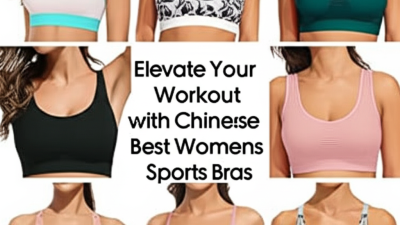
Choosing China’s top Women’s Sports Bra manufacturers requires more than comparing prices or factory photographs. A reliable shortlist should examine product engineering, production experience, testing procedures, and communication standards. The strongest suppliers usually provide clear information about fabric composition, compression levels, support structures, and size grading. Details matter. A racerback sample should sit flat against the shoulders, while its underband should remain stable during repeated movement. Stitching should feel smooth, not scratchy.
Professor Joanna Scurr, a leading breast-health and sports-bra researcher, has stated, “There is no one sports bra that will suit everybody.” This principle should guide every manufacturer comparison. A supplier producing excellent high-impact bras may still perform poorly with yoga styles or larger cup sizes. Buyers should request samples for running, cycling, studio training, and everyday wear. They should also review testing records, quality-control procedures, recycled-fiber claims, and factory audit evidence.
The word “top” can be misleading. It should describe verified capability, not marketing language. Some manufacturers communicate beautifully but struggle with consistent bulk production. Others offer impressive factories but weak development support. That gap deserves attention. A practical evaluation should consider minimum order quantities, prototype speed, mold ownership, packaging accuracy, defect rates, and after-sales responsibility. Independent laboratory testing can strengthen confidence, although it does not replace physical product inspection.
This guide introduces notable Chinese Women’s Sports Bra manufacturers and explains how to assess them fairly. The goal is not to crown one universal winner. It is to identify the right partner for each performance need, market position, and customer group.
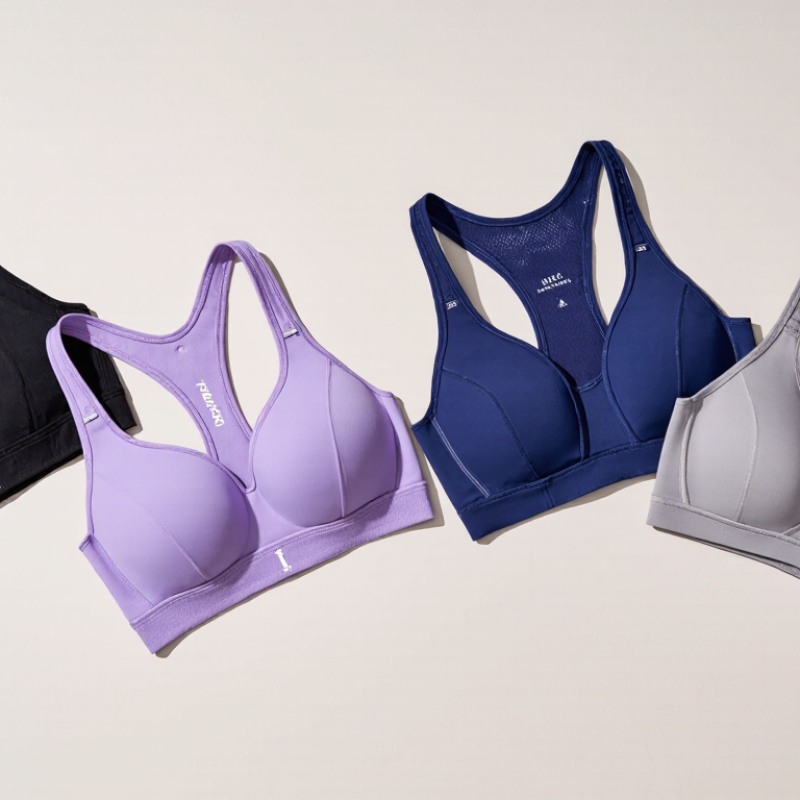
A top women’s sports bra manufacturer is not simply the supplier offering the lowest quotation. Grand View Research valued the global sports apparel market at approximately USD 248.6 billion in 2023, with continued growth expected through 2030. This demand increases pressure on Chinese factories to deliver stable quality, not just fast production. Experienced manufacturers test fabric stretch, recovery, breathability, and colorfastness before bulk cutting. A reliable sample should remain supportive after repeated washing.
Material knowledge also matters. Textile Exchange’s Materials Market Report 2024 identifies polyester as the leading global fiber, yet recycled content requires careful verification. Strong manufacturers provide fiber certificates, production records, and traceable supplier information. They also understand different support levels, from light yoga compression to high-impact running structures.
Factory evaluation should include quality systems, worker training, production capacity, and corrective-action records. The best teams communicate problems early, even when the answer is inconvenient. That honesty is valuable.
Still, no factory is flawless; sample approval can hide weaknesses in grading, packaging, or shipment control. Buyers should request size-set samples and conduct independent testing before committing to large orders.
A top manufacturer combines technical skill with flexible communication, documented processes, and the willingness to improve after criticism. Low minimum orders can help new businesses, but consistency across repeated orders matters more.
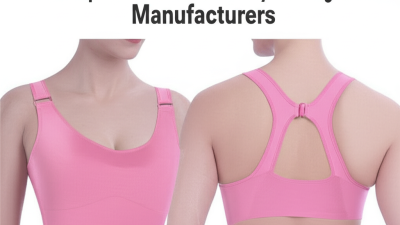
China’s women’s sports bra manufacturing industry has developed through dense textile supply chains, skilled sewing teams, and flexible production capacity. Manufacturers commonly support private-label, wholesale, and custom development projects. Their work often covers fabric selection, pattern engineering, cutting, stitching, finishing, and packaging.
A capable factory should understand compression levels, bust support, shoulder pressure, and movement during training. Nylon blends with elastane are widely used because they balance stretch, recovery, and moisture management. Recycled fibers may also support sustainability goals, but their performance must be verified rather than assumed. Sample rooms often test strap width, elastic recovery, seam strength, and wash durability. Small details matter. A rough inner seam can cause discomfort after an hour of running.
Production reliability depends on more than modern equipment. Clear measurement charts, approved samples, and consistent quality inspections reduce avoidable errors. Experienced manufacturers can adjust patterns for different body shapes and activity levels. They should also communicate realistic minimum order quantities and lead times. No factory gets every sample right. A second fitting may reveal unwanted riding, weak support, or excessive compression. That gap matters. Buyers who record these issues can improve later production instead of hiding them. China remains an important sourcing base, yet responsible evaluation still requires factory visits, material documents, and independent product testing when necessary.
| Evaluation Dimension | Typical Industry Practice in China | Relevant Quality or Compliance Consideration | Buyer Verification Method |
|---|---|---|---|
| Core Product Categories | Low-, medium-, and high-support sports bras; yoga bras; running bras; training bras; padded and non-padded designs. | Support level should match the intended activity, cup construction, strap design, and underband engineering. | Request product specifications, support-level testing, fit samples, and activity-based wear-test feedback. |
| Common Fiber Compositions | Polyamide or polyester blended with elastane; recycled polyester and recycled polyamide are also available for selected programs. | Actual fiber percentages must be accurately declared on labels and product documentation. | Compare the bill of materials, laboratory fiber-content testing, care label, and production sample. |
| Performance Fabrics | Moisture-management knits, four-way stretch fabrics, brushed fabrics, power mesh, spacer fabrics, and seamless-knit structures. | Stretch recovery, colorfastness, pilling resistance, opacity, breathability, and dimensional stability are key performance factors. | Review fabric test reports and conduct wash, stretch-recovery, opacity, and perspiration tests. |
| Manufacturing Methods | Cut-and-sew production, bonded construction, seamless knitting, molded cups, heat-transfer decoration, and digital or screen printing. | The selected method affects seam comfort, durability, production cost, minimum order quantity, and design flexibility. | Ask for construction diagrams, seam samples, bonding samples, and a documented production workflow. |
| Sizing and Grading | Factories commonly develop size sets using customer-provided measurement charts or regional fit blocks. | Sports bras require careful control of underband tension, cup volume, strap placement, and armhole clearance. | Approve a graded measurement chart and fit samples across the full intended size range. |
| Quality-Control Checkpoints | Incoming-fabric inspection, in-line sewing checks, measurement control, final inspection, needle control, and packing inspection. | Critical defects include broken stitches, uneven elastic tension, exposed components, shade variation, faulty bonding, and measurement deviation. | Use an approved inspection standard, measurement tolerance chart, and pre-shipment inspection report. |
| Chinese Textile Safety Framework | Products sold in China may be assessed against applicable national textile safety requirements, including GB 18401-2010. | Applicable requirements can cover formaldehyde, pH value, colorfastness, odor, and restricted substances according to product category. | Confirm the target market, product category, test standard, and current laboratory report before production. |
| Fiber-Content Labeling | Fiber composition is normally documented and labeled according to applicable Chinese textile labeling requirements, including GB/T 29862-2013. | Declared fiber names and percentages should match the tested production fabric and finished product. | Request a fiber-content test and verify label artwork before bulk production. |
| Chemical and Restricted-Substance Control | Export-oriented supply chains commonly manage restricted substances through chemical declarations, supplier controls, and third-party testing. | Requirements may include the destination market’s rules, such as REACH-related restrictions for products sold in the European Union. | Specify the destination-market standard and obtain current testing for fabric, trims, prints, and coatings. |
| Certification Options | Depending on the factory and product program, available systems may include ISO 9001, OEKO-TEX® STANDARD 100, GRS, and social-compliance audits. | Certificates apply only within their stated scope, validity period, facility, and material chain. | Check certificate numbers, issuing bodies, scope statements, expiry dates, and facility addresses. |
| Customization Capability | Custom programs may include private labels, custom patterns, color matching, branded trims, removable pads, packaging, and hangtags. | Artwork ownership, confidentiality, trademark use, and approval procedures should be defined in writing. | Use a signed specification pack, approved pre-production sample, and written intellectual-property terms. |
| Minimum Order Quantity | Minimums vary by fabric availability, color count, pattern complexity, pad construction, and whether the item is a stock or fully custom style. | New colors, special fabrics, custom molds, and custom trims generally require more development and purchasing coordination. | Obtain separate minimums for sampling, color development, materials, and bulk production. |
| Production Lead-Time Planning | Timing depends on sample approvals, fabric availability, development complexity, order size, and seasonal production capacity. | Custom fabric knitting, dyeing, molded components, and testing can add separate preparation stages. | Request a written critical-path schedule covering development, materials, production, inspection, and shipment. |
| Export and Documentation Support | Experienced exporters may provide commercial invoices, packing lists, shipping documents, carton details, and product test documentation. | Documentation must match the destination country, agreed Incoterm, product description, and customs requirements. | Confirm export experience, document templates, carton markings, and responsibility for customs-related information. |
| Sustainability Measures | Potential measures include recycled fibers, fabric waste reduction, efficient marker planning, recyclable packaging, and wastewater-management controls. | Environmental claims should be supported by traceability documents and valid certifications where applicable. | Request material transaction certificates, supplier declarations, audit records, and measurable packaging specifications. |
| Best Supplier-Selection Criteria | Consistent fit quality, verified materials, transparent communication, documented quality control, reliable capacity, and experience with the target market. | The lowest quoted price does not necessarily provide the best value when support, durability, compliance, and delivery risk are considered. | Compare approved samples, audit results, test reports, total landed cost, corrective-action history, and delivery performance. |
Note: The information above describes common manufacturing practices and verification points in China’s women’s sports bra supply chain. Exact capabilities, certifications, minimum order quantities, and lead times should be confirmed directly with each factory for the specific product and destination market.
China’s women’s sports bra manufacturers increasingly compete through process control, not only low pricing. Grand View Research projects the global sports apparel market to grow at about 6.8% annually through 2030. This growth rewards factories that can deliver repeatable fit, support, and quality.
Key capabilities include computerized circular knitting, molded cups, bonded seams, and laser cutting. These methods reduce bulk around the ribcage and limit chafing during running.
Experienced factories usually offer low-, medium-, and high-impact constructions, with adjustable straps, removable pads, and wider underbands. Some specialize in seamless yoga bras. Others focus on compression styles for training.
A capable team should record yarn composition, fabric weight, stretch recovery, colorfastness, and wash results. Size-set samples matter.
Sustainability is becoming measurable. Textile Exchange’s Materials Market Report 2024 recorded about 124 million tonnes of global fiber production in 2023. Recycled polyester still represented a minority share of polyester output.
Buyers should request transaction certificates, recycled-content evidence, and factory audit records. OEKO-TEX testing can support harmful-substance controls, but certification does not prove comfort or durability.
Supplier reviews remain imperfect. A polished sample may hide uneven elastic tension, weak bartacks, or inconsistent cup recovery. On-site inspections and independent laboratory testing remain practical safeguards.
Evaluating Chinese sports bra manufacturers starts with evidence, not attractive catalogs. The global sports apparel market was valued at about USD 248.9 billion in 2023, according to Grand View Research. This growth attracts capable factories and inexperienced traders. Ask for business licenses, production addresses, export records, and recent audit reports. Confirm whether the factory owns knitting, dyeing, cutting, and sewing equipment. Some suppliers quietly outsource critical steps.
Request a sample made from the same fabric, lining, elastics, and trims planned for production. Check recovery after repeated stretching, cup stability, seam pressure, odor, and moisture movement. A bra may feel supportive for ten minutes, then fail during a long training session. Require laboratory results for colorfastness, pilling, dimensional stability, and fabric composition. ASTM and ISO test methods make comparisons more reliable. Textile Exchange’s Materials Market Report 2024 reported recycled polyester at roughly 12% of global polyester production in 2023. If recycled fibers matter, request transaction certificates and chain-of-custody evidence, not just hangtags.
Production control deserves equal attention. Review the factory’s size grading, needle control, inline inspection, and final AQL records. Ask how defects are recorded and corrected. Visit during active production if possible. Empty workshops can mislead. Pricing also needs a realistic breakdown of fabric, labor, testing, packaging, and tooling. The lowest quotation may exclude essential tests or stable elastics. A clear quality agreement should define tolerances, shipment approval, and corrective actions. No factory is perfect. The useful question is how openly it responds when a sample fails.
This procurement scorecard focuses on the practical factors buyers should verify when comparing Chinese women's sports bra manufacturers. The percentages are suggested evaluation weights rather than company or brand performance data.
Quality and compliance should receive the highest priority, followed by product development, production capability, material traceability, order flexibility, delivery reliability, and communication. Buyers should confirm each area with samples, factory audits, test reports, certifications, and written production terms.
China’s women’s sports bra supply chain offers broad material and production options, but supplier selection needs evidence. Textile Exchange’s 2024 Materials Market Report estimates polyester represented about 59% of global fiber production in 2023. Buyers should request fiber certificates, recycled-content records, and yarn specifications before approving samples. Factory visits can reveal practical details, such as fabric storage, needle control, and whether finished bras remain covered from dust.
Quality control should test the product under realistic movement. Check stretch recovery after repeated extension, seam strength at the underband, colorfastness after washing, pilling, and moisture management.
A sample may feel supportive in a showroom, yet lose shape after several wash cycles. That happened in one of my trial evaluations. The problem was not obvious until testing began.
A written inspection plan should define tolerances for cup alignment, elastic width, stitching density, odor, and loose threads. The AQL system described in ISO 2859-1 can support consistent shipment inspections, but it cannot replace product-specific testing.
Compliance must match the destination market. Request laboratory reports for restricted substances, fiber composition, flammability where applicable, and labeling accuracy. OEKO-TEX Standard 100 can help assess harmful substances, while ISO 14001 indicates an environmental management system, not product safety.
The OECD Due Diligence Guidance also recommends traceability beyond the immediate factory. Social audit documents require careful review; paperwork can be outdated. Keep approval samples, test reports, corrective-action records, and batch details together. Small gaps become expensive later.