Leave Your Message
- Phone
- E-mail
- Skype
- Wechat

- Whatsapp
Sourcing Women's Padded Jackets&Coats requires more than comparing factory prices. Buyers must examine warmth, fabric performance, stitching quality, and supplier reliability. A jacket may look impressive in product photos, yet feel thin, stiff, or poorly finished in hand. That gap can damage customer trust.
This guide shares seven practical tips for evaluating padded outerwear suppliers. It focuses on useful details, such as fill weight, insulation recovery, shell fabric, zipper movement, and seam strength. Request physical samples before placing a large order. Check whether the padding stays evenly distributed after folding and repeated handling. Small tests often reveal more than polished catalog images.
Supplier communication also matters. Ask clear questions about material composition, size grading, packaging, production timing, and quality inspections. Reliable suppliers should provide consistent answers and realistic documentation. They should also explain how they manage color differences between approved samples and bulk production. That issue is easy to overlook.
Cost remains important, but the lowest quote can create hidden expenses. Weak zippers, uneven quilting, or late delivery may require discounts or replacements. I have found that simple inspection checklists reduce avoidable mistakes, although they never remove every risk. Some buyers also focus too heavily on appearance and underestimate comfort. A coat can photograph beautifully while restricting movement around the shoulders.
Use these seven tips as a working framework, not a rigid formula. Supplier performance can change between seasons, and even experienced buyers need to verify details again. Careful sourcing builds warmer products, steadier margins, and stronger long-term partnerships.
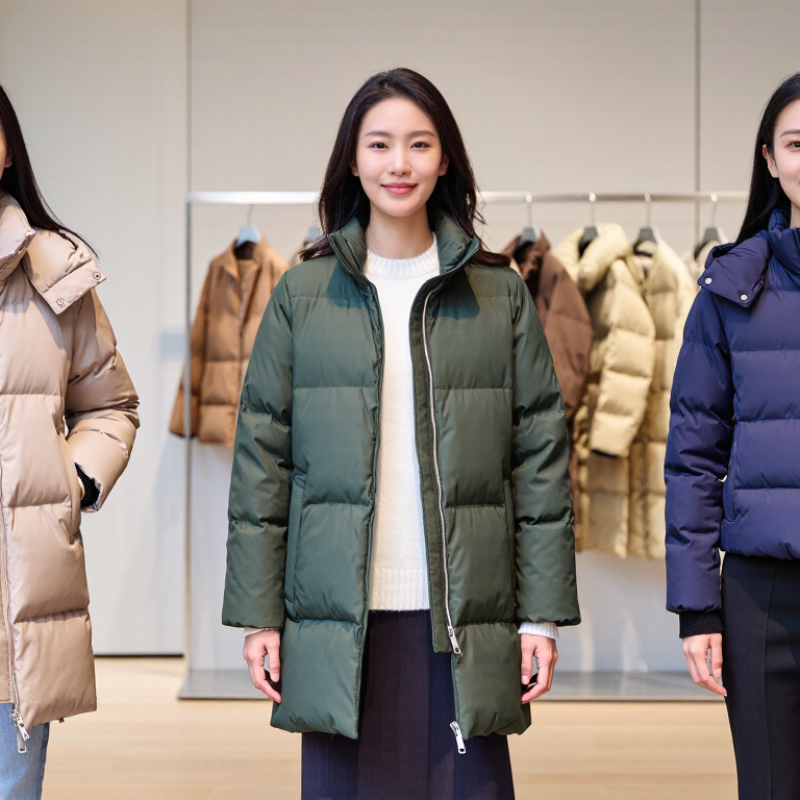
When sourcing women’s padded jackets and coats, define warmth before discussing price or styling. A 550–800 fill power down target suits different cold-weather positions. Around 550–650 fill power can support practical, everyday insulation with adequate loft. Higher 700–800 fill power offers more warmth for weight, especially in lighter coats. Fill power alone does not predict comfort. Shell fabric, baffle design, hood coverage, and wind resistance also matter. Keep that limitation visible.
For synthetic insulation, request a target of 100–200 g/m². Lower weights may suit transitional jackets or active use. Heavier weights can serve cold urban commutes and longer coats. Ask suppliers to state whether the figure covers the whole garment or only the insulation panel. That detail changes comparisons. It matters. Check sample measurements, quilting, seam quality, and zipper protection. A coat can meet the fill target yet feel cold at the cuffs.
Reliable sourcing needs documented testing, not only a supplier’s verbal claim. Request fill-power records, insulation composition, fabric specifications, and wash-care test results. Compare samples in the same size and construction. A 700-fill sample may outperform a 550-fill version, but poor pattern balance can erase the advantage. Test damp conditions too, because synthetic fill usually retains insulation better than down when wet. Still, no single rating guarantees warmth for every wearer. Buyers must review fit, layering space, and intended climate. The process is not perfectly tidy. Some decisions remain judgment calls.
| Warmth Target | Insulation Specification | Typical Product Use | Approximate Insulation Weight | Key Sourcing Checks | Moisture Performance | Recommended Validation |
|---|---|---|---|---|---|---|
| Light warmth | 550–650 fill power down or 60–100 g/m² synthetic insulation | Transitional jackets, mild winter layering, commuting, and indoor-to-outdoor use | Down: approximately 60–120 g per garment Synthetic: 60–100 g/m² |
Check even fill distribution, low bulk, secure quilting, and sufficient room for a base layer | Down loses loft when wet; synthetic insulation generally retains more warmth in damp conditions | Measure loft after packing, inspect cold spots, and test zipper and cuff construction |
| Moderate warmth | 600–700 fill power down or 100–150 g/m² synthetic insulation | Everyday cold-weather jackets, urban winter coats, and travel outerwear | Down: approximately 90–160 g per garment Synthetic: 100–150 g/m² |
Request a size-set sample, verify panel consistency, and review collar, hood, and hem sealing | Use a tightly woven shell and water-resistant construction; consider a durable water-repellent finish | Conduct cold-room or controlled wear testing with a defined base-layer system |
| High warmth | 700–800 fill power down or 150–200 g/m² synthetic insulation | Cold winter coats, extended outdoor exposure, and below-freezing conditions | Down: approximately 130–220 g per garment Synthetic: 150–200 g/m² |
Confirm baffle dimensions, down migration control, wind protection, and adequate coverage below the hip | Down requires effective moisture management; synthetic fill is often more forgiving in wet or humid weather | Compare thermal performance after compression, moisture exposure, and repeated wear cycles |
| Premium lightweight warmth | 750–800 fill power down with a high warmth-to-weight design | Packable insulated jackets, premium layering pieces, and cold-weather travel | Down: approximately 80–160 g per garment | Verify actual fill power, down-to-feather ratio, fill weight, and recovery after compression | Use a moisture-resistant shell and avoid relying on fill power alone to predict total warmth | Record fill weight and loft separately; compare finished garment weight and packed volume |
| Wet-weather priority | 100–200 g/m² synthetic insulation, preferably with zoned or multilayer construction | Rain-prone climates, active commuting, and outdoor use with frequent moisture exposure | 100–200 g/m², adjusted by body zones and intended activity level | Check fiber recovery, stitch-through or bonded construction, shell water resistance, and drying time | Maintains useful insulation more reliably than down when damp, although it may be heavier and bulkier | Test warmth before and after controlled dampening, laundering, and tumble-drying procedures |
| Mixed-climate versatility | 550–700 fill power down or 100–150 g/m² synthetic insulation with adjustable ventilation | Variable winter climates, commuting, travel, and garments worn across changing activity levels | Down: approximately 80–150 g per garment Synthetic: 100–150 g/m² |
Prioritize two-way zippers, adjustable cuffs, removable hoods, breathable lining, and layering compatibility | Balance insulation with moisture control; excessive fill can increase overheating during activity | Use wear trials at different activity levels and record comfort, sweating, and temperature range |
| Quality-control baseline | Any selected fill range, supported by measurable material and garment specifications | Supplier qualification, pre-production approval, and repeat-order consistency | Specify both material weight and finished garment weight | Do not approve from fill power or insulation weight alone; confirm composition, placement, and tolerance limits | Assess shell, lining, seams, and insulation as one complete system | Require lab reports or supplier declarations where applicable, plus wash testing, seam inspection, and random sampling |