Choosing the right top can change how an outfit feels, moves, and performs throughout the day. Women’s Tank Tops come in many shapes, fabrics, and support levels, yet product names often create confusion. A slim ribbed tank may suit layered office wear, while a moisture-wicking racerback can feel better during a morning workout.
This guide examines the top 10 types of women’s tank tops through practical details, including neckline, strap width, fabric weight, stretch, and intended use. It considers everyday comfort as well as styling flexibility. Cotton tanks often feel soft against the skin, while modal, bamboo blends, and performance fabrics may offer smoother drape or faster drying. Small construction choices matter, too. A reinforced armhole can improve durability, and a longer hem may prevent constant readjustment.
Fit remains personal.
Body shape, climate, activity level, and wardrobe habits all influence the best choice. Some shoppers prefer built-in support, while others need a loose silhouette over a sports bra. The list also compares camisoles, muscle tanks, halter styles, cropped designs, racerbacks, and other recognizable options. It does not treat one style as universally superior, because that claim would be misleading. Even reliable advice has limits; fabric quality can vary between brands, and sizing is rarely consistent.
Use these comparisons as a practical starting point. Check care labels, inspect stitching, and consider how each tank performs after washing. The most attractive style is not always the most comfortable one.
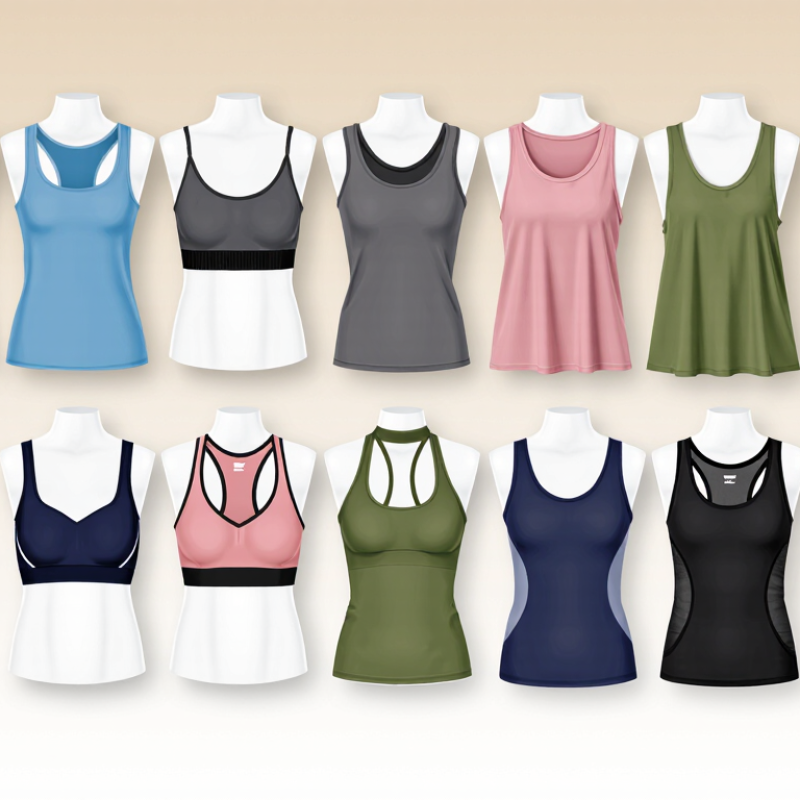
What Are the Top 10 Types of Women's Tank Tops?
Defining Women’s Tank Tops and Their Main Design Features
A women’s tank top is a sleeveless shirt designed to keep the shoulders and arms uncovered. Its shape can be simple, fitted, relaxed, sporty, or decorative. In clothing analysis, I look at the neckline, strap width, fabric, length, and intended movement. These details separate a basic tank from a camisole, racerback, crop top, halter top, or built-in bra style.
The neckline strongly changes the garment’s character. Scoop necks feel casual, while V-necks create a longer visual line. High necks offer more coverage, and square necks add a structured appearance. Straps may be thin, wide, crossed, adjustable, or tied behind the neck. A racerback supports active movement, but it may expose more of the upper back than some wearers expect. Small differences matter.
Fabric affects comfort as much as design. Cotton feels familiar and breathable, while stretch blends improve movement and recovery. Ribbed textures can follow the body closely, whereas lightweight woven fabric usually hangs more freely. Hem length also matters, from waist-level crops to hip-covering silhouettes. I once assumed a loose tank would suit every warm day, but excessive fabric felt uncomfortable during walking. Fit remains personal, and even careful design advice cannot replace trying the garment on.

Among the ten main types of women’s tank tops, basic, camisole, racerback, and ribbed styles remain everyday essentials. A basic tank usually has wider straps and a simple neckline. It works well under shirts, cardigans, or lightweight jackets. Cotton blends feel breathable, while a small amount of stretch helps the fabric recover after washing. The best fit should sit smoothly without pulling across the chest. Small details matter.
A camisole offers thinner straps and a softer, more delicate appearance. It suits warm days, layered outfits, and relaxed indoor wear. Check whether the straps adjust easily and whether the neckline provides enough coverage for movement. A racerback tank brings the shoulder straps together at the back. This design keeps straps away from the shoulders during walking, stretching, or training. However, the armholes may feel too open for some body shapes. Try reaching overhead before choosing it.
Ribbed tanks have raised vertical texture, often created with knitted ribs. The fabric can feel flexible and contour the body without needing heavy decoration. Look for even ribs, secure seams, and fabric that does not become transparent under bright light. Ribbed styles are useful with denim, skirts, or loose trousers. I once assumed tighter ribbing always meant better support, but that was a poor shortcut. Fit depends more on fabric recovery and construction. Washing instructions also deserve attention, since heat can shorten or distort some stretchy tanks.
This chart compares ten widely recognized women's tank top styles using a transparent everyday versatility index. Each style is scored from 1 to 10 according to its layering potential, styling flexibility, comfort, and suitability for daily wear; the index is editorial rather than market-share data.
Activewear tanks are among the most practical choices in a ten-style wardrobe. The right cut should match the activity, body movement, and level of support required. An athletic tank often uses lightweight, breathable fabric with flat seams. These details help reduce rubbing during running or cycling. Look for quick-drying material and armholes that stay flat. A loose opening may feel cool, but it can shift during vigorous movement.
Built-in bra tanks combine coverage and convenience. They work well for walking, yoga, strength training, and daily errands. Support varies widely, so check the band width, lining, and removable cups. A gentle elastic band may suit low-impact exercise. Higher-impact workouts usually need firmer support and a closer fit. In my own fitting experience, a tank can feel secure at first, then ride upward after several minutes. Sizing charts help, but they are not perfect.
Muscle tanks offer wider arm openings and a relaxed shape. They allow fuller shoulder movement during lifting or stretching. Their cut also creates useful airflow around the upper body. Choose a smooth hem that will not bunch under a jacket or waistband. Oversized styles can improve comfort, yet excessive fabric may distract during training. I once assumed looser meant better. It did not. A practical fitting test is simple: raise both arms, twist, and bend before buying.
Women’s tank tops now extend beyond basic layering. The ten leading types include classic, camisole, racerback, square-neck, high-neck, tube, halter, cropped, peplum, and fitted tanks. Among them, statement silhouettes create the strongest visual change. McKinsey’s State of Fashion 2025 describes fashion growth as low and cautious. That makes versatile design more valuable. A halter tank exposes the shoulders and frames the collarbone. It works well with wide-leg trousers or a structured blazer. However, the neckline may feel unstable during active movement.
Cropped tanks suit high-rise jeans, skirts, and tailored shorts. Their shorter hem creates a clear waistline, but proportions matter. A two-inch difference can change the entire outfit. Peplum tanks add a soft flare around the waist. They can balance narrow shoulders and create movement around the hips. Yet, excessive volume may feel dated or uncomfortable under fitted jackets. Cotton Incorporated’s Global Lifestyle Monitor reports that comfort remains a major clothing priority for consumers. Fabric weight, stretch recovery, and seam placement therefore deserve attention. My fitting experience suggests that attractive shape alone is not enough.
Tips: Check the armhole before buying. It should stay flat without cutting into the skin. For halter styles, test shoulder comfort for ten minutes. Choose cropped lengths according to your rise, not trend photos. With peplum tanks, look for breathable fabric and a flare that begins smoothly. Grand View Research continues to identify women’s apparel as a large global market, but broad market data cannot predict personal comfort. That part still requires honest fitting.
| No. | Tank Top Type | Defining Design Feature | Typical Coverage | Typical Support Level | Commonly Suited For | Styling Notes |
|---|---|---|---|---|---|---|
| 1 | Classic Tank Top | Straight neckline with shoulder straps and a simple, sleeveless cut. | Moderate chest, shoulder, and underarm coverage. | Low to medium, depending on the fabric and built-in lining. | Everyday wear, layering, casual errands, and warm-weather outfits. | Pairs easily with jeans, shorts, skirts, cardigans, or lightweight jackets. |
| 2 | Halter Tank Top | Straps or fabric converge behind the neck, leaving the shoulders exposed. | Usually moderate at the front and lower across the upper back and shoulders. | Low to medium; a wider neck tie or supportive band can improve stability. | Evening outfits, holidays, parties, and warm-weather social events. | Works well with high-waisted trousers, wide-leg pants, maxi skirts, and statement earrings. |
| 3 | Cropped Tank Top | Hemline ends above the natural hip, often near the waist or ribcage. | Varies from moderate to minimal midriff coverage. | Low to medium; support depends on straps, elastic bands, and construction. | Casual outfits, festivals, vacations, dancewear, and fitness layering. | Balances well with high-rise jeans, trousers, skirts, or loose overshirts. |
| 4 | Peplum Tank Top | Fitted through the bust with a flared, gathered, or pleated section at the waist. | Moderate upper-body coverage with added coverage around the waist and hips. | Low to medium, unless designed with a structured bodice. | Office-casual outfits, brunch, dinners, and polished daytime looks. | Looks refined with slim trousers, straight-leg jeans, pencil skirts, or tailored shorts. |
| 5 | Racerback Tank Top | Shoulder straps join between the shoulder blades to create a Y-shaped back. | Moderate front coverage with a more open upper back and shoulders. | Medium when made with stretch fabric or a supportive underband. | Exercise, yoga, running, casual layering, and active daily wear. | Often worn with leggings or joggers; a sports bra can provide additional support. |
| 6 | Spaghetti-Strap Tank Top | Uses narrow, delicate shoulder straps, commonly with a lightweight construction. | Moderate front coverage with limited shoulder coverage. | Low, unless reinforced with an inner layer or structured bust area. | Layering, summer outfits, sleepwear-inspired looks, and relaxed occasions. | Layers neatly under blazers, cardigans, sheer tops, and open button-down shirts. |
| 7 | Built-In Bra Tank Top | Includes an integrated shelf bra, molded cups, or an internal supportive lining. | Usually moderate, with more secure coverage around the bust. | Medium; support varies according to band width, cup construction, and fabric stretch. | Low-impact workouts, travel, casual wear, and comfortable layering. | Can be worn alone or under an open shirt; choose a snug but non-restrictive fit for stability. |
| 8 | High-Neck Tank Top | Neckline rises closer to the base of the neck than a traditional tank top. | Higher neckline coverage with exposed shoulders and arms. | Low to medium; a close-fitting cut can create a more secure feel. | Layering, contemporary casual outfits, studio activities, and modest styling. | Pairs with wide-leg pants, tailored bottoms, denim, or layered necklaces for contrast. |
| 9 | Square-Neck Tank Top | A straight, angular neckline creates a defined frame across the upper chest. | Moderate chest coverage with open shoulders and upper arms. | Low to medium; wide straps and a fitted bodice may add stability. | Casual outings, work-friendly layering, dinners, and smart-casual dressing. | Complements high-rise bottoms and draws attention to short necklaces or simple pendants. |
| 10 | Cowl-Neck Tank Top | Soft fabric gathers into a draped neckline with visible folds. | Variable front coverage depending on the depth and drape of the neckline. | Low; the style emphasizes drape rather than firm bust compression. | Evening outfits, dinners, office layering, and dressier casual looks. | Combines well with fitted skirts, tailored trousers, slim jeans, and understated jewelry. |
Women’s tank tops differ most in fit, fabric, and purpose. A classic crew-neck tank gives reliable coverage for office layering and casual errands. Scoop-neck styles feel softer and more relaxed, while V-necks lengthen the neckline for a sharper appearance. Racerback tanks support freer shoulder movement during workouts, especially in stretch polyester or nylon blends. Camisoles, often made from satin or lightweight cotton, suit sleepwear, warm evenings, and delicate layering.
Halter tanks expose the shoulders and work well for beach days or social gatherings. Square-neck tanks offer a structured, vintage-inspired shape and pair neatly with high-waisted trousers. Cropped tanks suit high-rise bottoms, but their shorter length may feel impractical when bending. Peplum tanks add volume around the waist and can balance fitted skirts. Moisture-wicking athletic tanks are useful for training, though they may feel too technical for everyday outfits. Fit charts help, but bodies do not follow charts perfectly.
Tips: Check armhole comfort before buying. A tight opening can rub after several hours. Choose cotton or modal for breathability, and select stretch blends for movement. Hold the fabric against light to judge transparency. I often recommend sitting, reaching, and raising both arms during a fitting. A tank that looks polished while standing may shift awkwardly when worn. That detail is easy to miss.