Leave Your Message

China Top Women's 1/4 Zips Suppliers for Global Buyers

China has become a major sourcing destination for Women's 1/4 Zips, serving sportswear brands, private labels, and outdoor retailers worldwide. The strongest suppliers combine fabric knowledge, stable production, and careful quality control. They do more than place a zipper on a fleece top. They manage stretch recovery, collar shape, seam comfort, color consistency, and size grading.

According to apparel sourcing consultant Elena Morris, “A reliable quarter-zip supplier proves performance before promising volume.” This principle matters during supplier evaluation. Buyers should request fabric composition, weight, shrinkage results, colorfastness records, and sample measurements. A soft polyester blend may feel excellent in a showroom but perform poorly after repeated washing. Small details expose weak production systems.

Look closely.

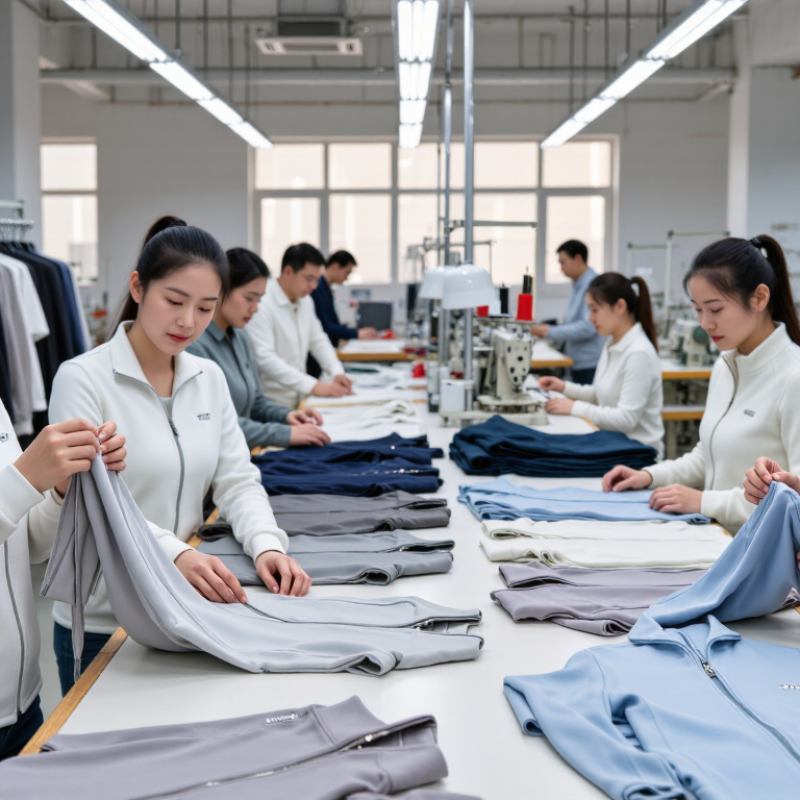
Factory experience also matters. A capable Chinese manufacturer can explain its knitting process, embroidery limits, inspection points, packaging methods, and minimum order quantities. It should communicate clearly when a requested finish is unrealistic. That honesty is valuable, although not every supplier demonstrates it consistently. Buyers may still need independent inspections and pre-production approvals.

This guide examines leading China-based Women's 1/4 Zips suppliers for global buyers. It considers product quality, customization, production capacity, certifications, communication, and delivery reliability. The comparison is practical rather than promotional. Supplier claims should be verified against samples, factory evidence, and recent buyer feedback. A polished catalog is not proof. A well-tested sample, however, reveals much more.

China Top Women's 1/4 Zips Suppliers for Global Buyers

Defining Women’s 1/4 Zip Apparel and Its Global Market Role

Women’s 1/4 zip apparel is a pullover with a short zipper from the neckline to the upper chest. It usually includes a stand collar, shaped seams, and stretch fabric. Common materials include polyester, recycled polyester, nylon, elastane, and cotton blends. The design supports layering during commuting, training, travel, and light outdoor activity. Its appeal is practical, but not universal.

Grand View Research valued the global sports apparel market at approximately US$181.5 billion in 2022. It also projects continued growth through 2030. Women’s 1/4 zips fit this expansion because they combine performance features with everyday styling. Moisture management, quick drying, and four-way stretch matter to active users. Soft hand-feel matters just as much. Buyers may overlook that detail.

The global role of this category also reflects material pressure. Textile Exchange reported that worldwide fiber production reached about 124 million tonnes in 2023. Polyester remained the dominant fiber group. Therefore, suppliers need clear fiber documentation, measurable recycled content, and consistent test records. Fit development requires more than grading down a men’s pattern. Shoulder width, bust shaping, sleeve mobility, and hem balance need physical sampling. A sample can look correct on a screen and still fail during movement. That is an uncomfortable but useful sourcing lesson. Global buyers should compare shrinkage, colorfastness, zipper performance, and size tolerance before placing larger orders. Industry reports provide direction, not certainty.

Key Features and Materials of High-Quality Women’s 1/4 Zips

China Top Women's 1/4 Zips Suppliers for Global Buyers

High-quality women’s 1/4 zips begin with balanced fabric selection. Textile Exchange’s Materials Market Report 2024 estimates that polyester represented about 57% of global fiber production in 2023. Its durability suits frequent training and repeated washing. However, recycled content alone does not guarantee better performance. Buyers should request fiber-origin records, recycled-content verification, and fabric test results.

A reliable 1/4 zip usually uses a smooth polyester or polyester-spandex blend. A practical weight is around 220–320 gsm for transitional weather. Spandex improves stretch, while brushed interiors add warmth without excessive bulk. Look for flat seams, a covered zipper, reinforced cuffs, and a neckline that closes smoothly under the chin. Moisture-wicking finishes should be tested after washing, not judged by touch. That matters.

The International Organization for Standardization’s ISO 6330 washing procedures help laboratories compare dimensional change and color performance. Suppliers should also provide pilling, seam-strength, colorfastness, and shrinkage reports. One weakness remains: softer fabrics can pill faster when recycled fibers are poorly selected. A sample may feel excellent yet fail after ten washes.

Tips: Ask for three production samples, not one. Measure chest width, sleeve length, and body length after washing. Check zipper movement with gloves. Request chemical-safety documentation and factory quality-control records. Small details reveal large risks.

How to Evaluate China-Based 1/4 Zip Clothing Suppliers

China Top Women's 1/4 Zips Suppliers for Global Buyers

When evaluating China-based women’s 1/4-zip clothing suppliers, inspect more than catalog photos. Ask for fabric composition, weight, stretch recovery, zipper specifications, and size measurements. A reliable supplier should provide clear samples and consistent production records. Check whether the factory manages pattern making, sewing, finishing, and final inspection internally. In practical sourcing work, I compare the approved sample with bulk production. Small differences in collar shape or sleeve length can affect customer returns.

Tips: Request a physical sample before discussing large orders. Test the zipper repeatedly. Wash the garment several times. Check colorfastness, seam strength, pilling, and shrinkage. Ask for recent quality reports and relevant testing documents. Factory visits or independent inspections can confirm equipment, worker capacity, and storage conditions. Photos alone are not enough.

Review the supplier’s communication carefully. Do they answer technical questions directly? Can they explain lead times, minimum order quantities, packaging, and replacement procedures? A professional supplier should also confirm fabric availability before accepting production dates. Do not rely only on the lowest quotation. Low prices may reflect thinner fabric, weaker stitching, or unstable subcontracting. I have seen polished samples create unrealistic expectations. That mistake is worth remembering. Written specifications, approved samples, inspection points, and payment terms should be agreed before production begins.

Production, Customization, and Quality Control Standards

China’s leading women’s 1/4 zip suppliers typically manage production through clear specifications and repeatable processes. Buyers should provide fabric weight, fiber content, size charts, color references, and zipper requirements. A detailed tech pack reduces interpretation errors. It also makes factory quotations easier to compare.

Customization may include brushed fleece, recycled polyester, contrast panels, embroidery, reflective details, or modified collars. Suppliers usually begin with a prototype and a pre-production sample. This stage checks fit, seam placement, zipper movement, and logo positioning. Small changes matter. A sleeve can feel restrictive after washing. A collar may lose shape during packing. Experienced teams test these points before bulk cutting.

Quality control should cover incoming fabric, cutting accuracy, sewing strength, measurement tolerance, and final appearance. Common checks include shrinkage, colorfastness, pilling, zipper cycles, and needle detection. AQL-based inspections can provide a consistent shipment standard, but they cannot replace clear communication. Factory audits, production photos, and random carton checks improve reliability. Still, no production line is flawless. One overlooked thread or uneven cuff can affect customer confidence. Buyers should record defects, review root causes, and adjust specifications for the next order. That reflective process often improves long-term performance more than a lower first quotation.

China Women’s 1/4-Zip Supplier Evaluation Framework

This reference chart organizes production, customization, and quality-control priorities for global buyers. The values represent the number of relevant ISO test or labeling references included in the evaluation matrix, not company or brand performance data.

Reference standards included: ISO 13688 for general protective-clothing requirements, ISO 105-C06 and ISO 105-X12 for colorfastness, ISO 5077 for dimensional change, ISO 13934-1 and ISO 13935-2 for fabric and seam strength, and ISO 3758 for care-labeling symbols.

Export, Compliance, and Sourcing Considerations for Global Buyers

China’s women’s 1/4 zips attract global buyers with flexible production and competitive pricing. Reliable sourcing starts with product definition, not factory lists. Specify fabric weight, stretch recovery, collar height, zipper length, seam construction, and intended climate. A 180gsm recycled polyester shell behaves differently from a brushed fleece style.

Ask suppliers for recent export experience and production evidence. Request factory photos, sample records, test reports, and references from comparable orders. A video call can reveal cutting space, sewing capacity, and finishing controls. Still, a polished factory tour proves little. Independent audits remain valuable.

Compliance requires careful documents. Confirm fiber composition, care instructions, country-of-origin marking, packaging rules, and restricted-substance testing for the destination market. Some buyers may need checks for colorfastness, lead, formaldehyde, or fluorinated finishes. Requirements change. Verify them with a qualified testing laboratory or local compliance adviser.

Use a signed technical pack and an approved pre-production sample. Record measurements after washing, not only before it. Small tolerance changes can affect women’s fit. Negotiate MOQ, payment stages, inspection points, carton dimensions, and Incoterms in writing. A cheap quotation may exclude testing, mold charges, or export handling.

Leave room for correction. Sizing is often underestimated. A supplier may meet the sample but miss bulk consistency. Third-party inspection before shipment can catch uneven topstitching, zipper waves, loose threads, and shade variation. Keep retain samples and batch records for future claims. Not always perfect. That is why traceability matters.

China Top Women's 1/4 Zips Suppliers for Global Buyers - Export, Compliance, and Sourcing Considerations for Global Buyers
Category Sourcing Dimension Typical Benchmark or Requirement Recommended Verification Evidence Global Buyer Consideration
Product Scope Garment Type Women's quarter-zip pullovers, including fleece, French terry, jersey, interlock, performance knit, and lightweight sweater constructions. Approved tech pack, construction specification, measurement chart, and pre-production sample. Define whether the product is intended for sportswear, casualwear, uniforms, travel, or layering.
Product Scope Fabric Composition Common commercial options include cotton-rich blends, polyester, recycled polyester, nylon blends, elastane blends, and wool or synthetic sweater knits. Fiber-content declaration and laboratory fiber-composition test from an independent laboratory. Fiber percentages must match the sewn-in label and destination-market labeling rules.
Product Scope Fabric Weight Lightweight jersey and performance styles are often approximately 160–240 g/m²; midweight fleece and terry commonly fall around 240–360 g/m². Fabric specification sheet and GSM test report from production bulk. Set an acceptable tolerance in the purchase specification because weight affects warmth, drape, freight, and retail positioning.
Product Scope Quarter-Zip Construction Specify zipper length, tape color, slider function, puller design, collar height, seam construction, chin protection, and zipper-end finishing. Sealed sample, component approval sheet, zipper inspection record, and measurement report. Chin guards and smooth slider operation are important for comfort and reduce consumer complaints.
Quality Colorfastness Performance targets should be agreed for washing, rubbing, perspiration, and light exposure; the required grade depends on the destination and end use. Colorfastness test report using the buyer's nominated or agreed test methods. Dark shades, fluorescent colors, pigment prints, and contrasting panels usually require additional risk control.
Quality Dimensional Stability Set post-wash shrinkage and spirality tolerances in the technical specification before bulk production. Before-and-after wash measurements, approved size-set sample, and final inspection report. Use the exact care process expected by the destination market when evaluating shrinkage.
Quality Pilling and Abrasion Performance requirements should be selected according to fabric type, intended wear, and buyer quality standard rather than using one universal threshold. Fabric pilling and abrasion reports, plus a retained bulk fabric swatch. Brushed fleece, recycled fibers, and soft-touch finishes may require extra pilling evaluation.
Order Planning Minimum Order Quantity Indicative factory quotations for cut-and-sew apparel may range from approximately 300–1,000 pieces per color or style, depending on fabric, trims, and production planning. Written quotation showing MOQ by style, color, size ratio, and fabric. Low quantities may increase the unit price, fabric surcharge, trim surcharge, or sampling fee.
Order Planning Sampling Timeline A first sample commonly requires about 7–15 working days after receipt of complete specifications and available materials. Sample-development schedule and dated sample comments. Custom-dyed fabrics, special trims, embroidery, and complex washes can extend the timeline.
Order Planning Bulk Production Lead Time A typical bulk-production planning window is approximately 30–60 days after approval of the pre-production sample, fabric, trims, and artwork. Production schedule, material booking record, inline inspection plan, and shipment-ready date. Confirm whether the lead time includes fabric development, laboratory testing, packing, and export preparation.
Costing Price Drivers Major cost factors include fabric composition and weight, dyeing, zipper and trim selection, garment construction, decoration, packaging, order quantity, and inspection requirements. Itemized quotation with fabric, trim, labor, packaging, testing, and tooling assumptions. Compare quotations on the same Incoterm, fabric specification, packaging standard, and quality level.
Export Trade Terms Commonly quoted terms include EXW, FOB, FCA, CIF, and DAP; the selected term determines which party manages freight, insurance, customs, and delivery risk. Signed quotation or purchase contract stating the Incoterms rule and named place or port. Use the current ICC Incoterms rule and clarify responsibility for export clearance and destination charges.
Export Core Shipping Documents Standard export files generally include a commercial invoice, packing list, transport document, purchase order, and customs data; a certificate of origin may be needed for certain destinations or preference claims. Pre-shipment document set reviewed against the buyer's customs broker instructions. Check HS classification, carton markings, country-of-origin marking, gross weight, net weight, and package count.
Compliance European Union Textile Labeling Textile products sold in the European Union generally require fiber-composition labeling under Regulation (EU) No. 1007/2011, with composition shown in descending order by percentage. Final label artwork, fiber test report, and review of language requirements for target member states. Do not use fiber names or percentage claims that are inconsistent with the verified composition.
Compliance United States Textile Labeling Apparel marketed in the United States generally needs fiber-content, country-of-origin, and responsible-company information under applicable Federal Trade Commission textile-labeling requirements. Label artwork, fiber-composition report, origin declaration, and compliance review before shipment. Care instructions may also be required under applicable U.S. care-labeling rules; confirm the final format with the importer.
Compliance Chemical Restrictions For European Union sales, materials and components should be assessed against applicable REACH substance restrictions and buyer-restricted-substance requirements. Recent test reports for fabric, print, coating, zipper, buttons, and other relevant components. Testing scope should reflect the actual color, finish, coating, and trim configuration shipped to customers.
Compliance Restricted Substances Program A written restricted-substances list should cover dyes, prints, water-repellent finishes, adhesives, plastics, metals, and packaging materials. Supplier declaration, chemical inventory, laboratory reports, and corrective-action records. Buyer-specific requirements can be stricter than statutory requirements and should be included in the purchase contract.
Compliance Social Responsibility Global buyers commonly assess working hours, wages, workplace safety, forced-labor risks, child-labor risks, and subcontracting controls. Valid social-audit report, factory license information, worker-interview records, and subcontractor disclosure. Confirm whether audits are accepted only from specified programs or approved independent auditors.
Sustainability Recycled Fiber Claims Claims such as “recycled polyester” should be supported by transaction documentation and a recognized chain-of-custody certification when required by the buyer. Scope certificate, transaction certificate where applicable, yarn or fabric supplier records, and claim approval. Separate pre-consumer and post-consumer content and state the percentage accurately.
Sustainability Packaging Optimization Use right-sized cartons, recycled or recyclable packaging where commercially appropriate, and avoid unnecessary individual plastic components. Packaging specification, carton test data, packing photos, and material declaration. Balance moisture protection and presentation requirements with freight efficiency and local packaging rules.
Factory Verification Production Capability Verify experience with women's grading, stretch fabrics, fleece or terry handling, zipper installation, decoration, pressing, and final packing. Factory profile, production-line photos, equipment list, sample history, and capacity statement. Confirm whether critical processes are performed in-house or by disclosed subcontractors.
Factory Verification Quality-Control System Use documented incoming-material inspection, first-piece approval, inline inspection, end-line inspection, and final random inspection. Inspection checklist, defect classification, measurement report, needle-control procedure, and corrective-action log. Agree acceptable quality limits, measurement tolerances, and critical defects before production starts.
Factory Verification Traceability Each bulk shipment should be traceable to purchase order, fabric lot, trim lot, production line, inspection record, and carton range. Lot records, carton labels, production records, and retained samples. Traceability supports faster investigation of shade, composition, quality, or customs issues.
Commercial Risk Payment Structure Common arrangements may include a deposit with the balance paid before shipment or against agreed shipping documents; terms should be negotiated according to risk and relationship. Signed sales contract, proforma invoice, bank-account verification, and payment milestones. Use staged approvals and avoid changing bank details without independent verification.
Commercial Risk Pre-Shipment Approval Require approval of the pre-production sample, size set, color standard, artwork, packaging, and final inspection outcome before dispatch. Signed approval records, inspection report, shipment photos, and sealed reference sample. Written approval criteria reduce disputes over color, fit, measurements, workmanship, and packaging.
Note: Lead times, MOQ ranges, testing scope, and commercial terms are indicative apparel-sourcing benchmarks rather than guaranteed offers. Confirm the final requirements with the selected factory, destination customs authority, importer, and applicable testing or certification body.