Leave Your Message
- Phone
- E-mail
- Skype
- Wechat

- Whatsapp
China remains a major sourcing destination for global buyers seeking reliable Women's Jackets suppliers. Its manufacturing base covers down coats, leather styles, trench coats, softshell jackets, and lightweight seasonal designs. Experienced factories often combine pattern development, fabric sourcing, cutting, sewing, and finishing under one roof.
The strongest suppliers support private-label programs with clear specifications and practical communication. Buyers should review fabric composition, insulation weight, seam construction, zipper quality, size grading, and colorfastness before placing bulk orders. Factory visits, video audits, production samples, and independent inspections can reveal details that catalog photos miss. A dependable partner also explains minimum order quantities, sampling charges, production capacity, payment terms, and realistic delivery schedules.
No supplier is flawless.
Even an attractive sample may contain hidden weaknesses. Stitch tension can change during mass production, and fabric performance may differ between batches. This is why careful buyers use approved samples, written quality standards, and staged inspections. Environmental claims and certifications also require verification, not assumptions. Standards such as recycled-content documentation, responsible chemical management, and workplace safeguards should match the product and destination market.
This guide examines leading China-based jacket suppliers through practical sourcing criteria. It considers manufacturing experience, product specialization, customization ability, quality control, communication, and export readiness. The goal is not to promote the largest factory automatically. A smaller specialist may offer better attention, while a large supplier may provide stronger capacity and process control. Global buyers can compare these differences more confidently and build a supplier shortlist based on evidence, not promises.
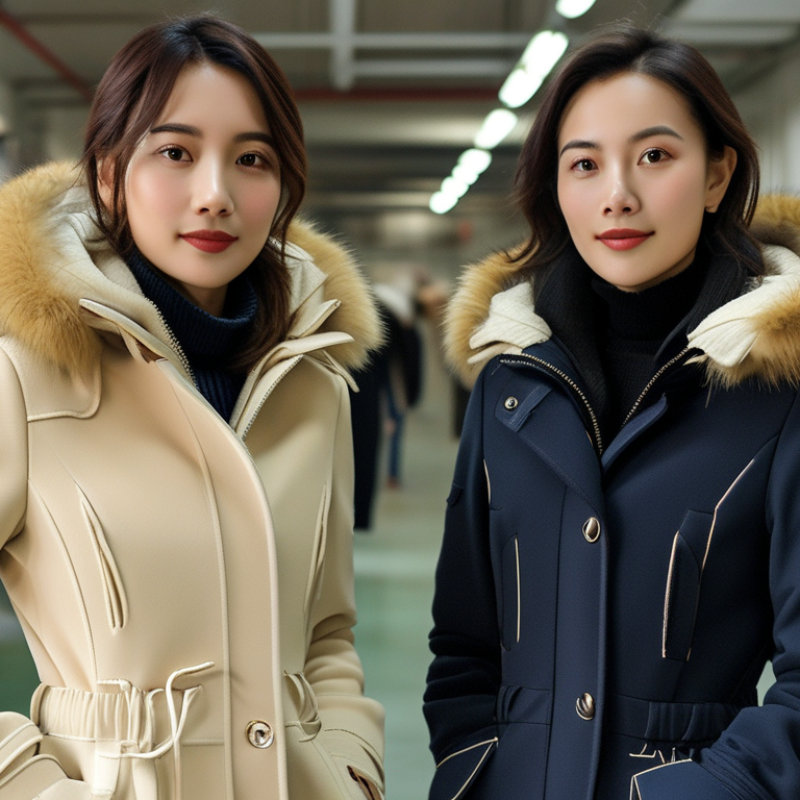
China’s women’s jacket supply base remains significant for global buyers. China’s apparel exports reached US$159.1 billion in 2023, according to China Customs data cited in international trade reports. The WTO’s World Trade Statistical Review 2024 also confirms China’s leading position in global clothing trade. This scale supports fabric sourcing, pattern development, sampling, and bulk production within one commercial ecosystem.
Women’s jackets require precise control. A winter parka may involve down alternatives, coated fabrics, seam sealing, and metal hardware. A lightweight blazer needs clean pressing and stable shoulder shaping. Factory experience matters because small fitting errors can affect entire size runs. UN Comtrade data can help buyers compare product flows by market and category. However, export value alone does not prove consistent quality. That is an easy mistake. Lead times, inspection records, material testing, and communication speed deserve equal attention.
Tips: Request a production sample before approving bulk orders. Check zipper strength, lining tension, sleeve balance, and wash performance. Ask suppliers for recent audit documents and test reports. Keep specifications measurable, including fabric weight, tolerance, color standard, and packaging details. Some suppliers may quote aggressively, but lower pricing can hide rework, weaker materials, or delayed delivery. A practical sourcing review should compare total landed cost, not only the factory quotation. Feedback from actual wear tests can reveal problems that photographs miss.
| Supply-Base Dimension | Verified 2023 Data | What It Means for Women's Jacket Buyers | Relevant Product Scope | Data Reference |
|---|---|---|---|---|
| Total apparel export value | US$159.1 billion | Shows the scale of China’s finished-garment export ecosystem, including outerwear, knitwear, woven clothing and other apparel categories. | Finished apparel exported from China; this figure is broader than women’s jackets alone. | China Customs / China Chamber of Commerce for Import and Export of Textiles |
| Total textile and apparel exports | US$293.6 billion | Indicates access to an integrated supply chain covering fibers, yarns, fabrics, trims, garments and export logistics. | Textiles plus apparel; includes both upstream materials and finished clothing. | China Customs trade statistics, 2023 |
| Textile export value | Approximately US$134.5 billion | Supports sourcing of shell fabrics, linings, padding, interlinings, woven materials and performance textiles from the same national supply base. | Textile products; excludes the US$159.1 billion apparel figure. | Derived from 2023 textile and apparel export totals |
| Woven women’s and girls’ outerwear | HS 6202 | Primary customs heading for many woven coats, jackets, anoraks, windcheaters and similar outerwear made for women and girls. | Includes non-knitted or non-crocheted outerwear; exact subheading depends on fiber composition and garment type. | World Customs Organization HS classification |
| Knitted women’s and girls’ outerwear | HS 6102 | Relevant for knitted or crocheted jackets, coats, anoraks, windcheaters and similar garments. | Includes knitted or crocheted outerwear; classification can vary according to construction and material. | World Customs Organization HS classification |
| Women’s woven jackets and tailored garments | HS 6204 | Useful when the product is a tailored jacket, blazer, suit jacket or coordinated women’s garment rather than a casual outer coat. | Women’s or girls’ suits, ensembles, jackets, blazers, dresses, skirts and related woven garments. | World Customs Organization HS classification |
| Man-made-fiber jacket sourcing | Fiber-specific subheadings | Polyester, nylon and other man-made-fiber classifications may affect customs duty, labeling, testing and landed-cost calculations. | Confirm shell, lining, filling and trim composition before selecting the final HS code. | HS classification rules and national customs schedules |
| Down and padded jacket sourcing | Material and filling dependent | Insulated women’s jackets require verification of filling composition, fill-power claims, testing, labeling and product safety requirements. | Down, feather, synthetic insulation, quilted jackets and winter outerwear. | Product specification and importing-country compliance requirements |
| Manufacturing footprint | Integrated national network | Buyers can compare factories by fabric access, sample development, sewing capacity, finishing, inspection and export experience without relying on a single region. | Common sourcing activities include fabric development, cutting, sewing, washing, bonding, quilting, finishing and packing. | China’s textile and garment manufacturing structure |
| Buyer verification priorities | Pre-order due diligence | Request business registration, factory audit records, production photos, test reports, sample approval, AQL inspection terms and shipment documentation. | Applicable to private-label, OEM, ODM, wholesale and contract-manufacturing programs. | International apparel procurement best practice |