Leave Your Message
- Phone
- E-mail
- Skype
- Wechat

- Whatsapp
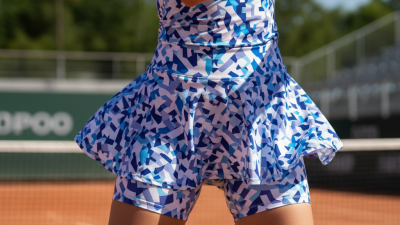
Custom Nylon Tennis Skirts sit at the intersection of growing tennis participation and practical teamwear purchasing. The International Tennis Federation’s Global Tennis Report 2024 estimates nearly 106 million players worldwide, compared with 84.4 million in 2019. In the United States, the USTA reported 25.7 million tennis participants in 2024, an 8% increase over 2023. These figures establish a growing player base, although they do not directly measure demand for customized skirts. For clubs, retailers, and tournament organizers, that distinction matters when planning inventory and comparing bulk suppliers.
Details matter. A skirt that looks sharp in a catalog can disappoint during lateral movement or repeated washing. Buyers should examine nylon composition, stretch recovery, waistband stability, and the construction of integrated shorts before approving production. Request measurable specifications: fabric weight in GSM, size tolerances, logo placement dimensions, and shrinkage results after washing. Test the pockets. A tennis ball should stay secure without pulling the hem sideways or restricting movement. Nylon alone does not guarantee breathability; fabric construction, finishing, and garment design also influence comfort.
Bulk buying involves compromises. A lower unit price may require fewer colors, longer lead times, or a larger minimum order quantity. Even an approved sample leaves uncertainty about consistency across hundreds of garments, so inspection terms deserve attention before payment. This selection of ten options provides a framework for comparing customization, functional details, and purchasing requirements. The strongest choice should match your players, budget, and delivery schedule—with evidence supporting the supplier’s claims.
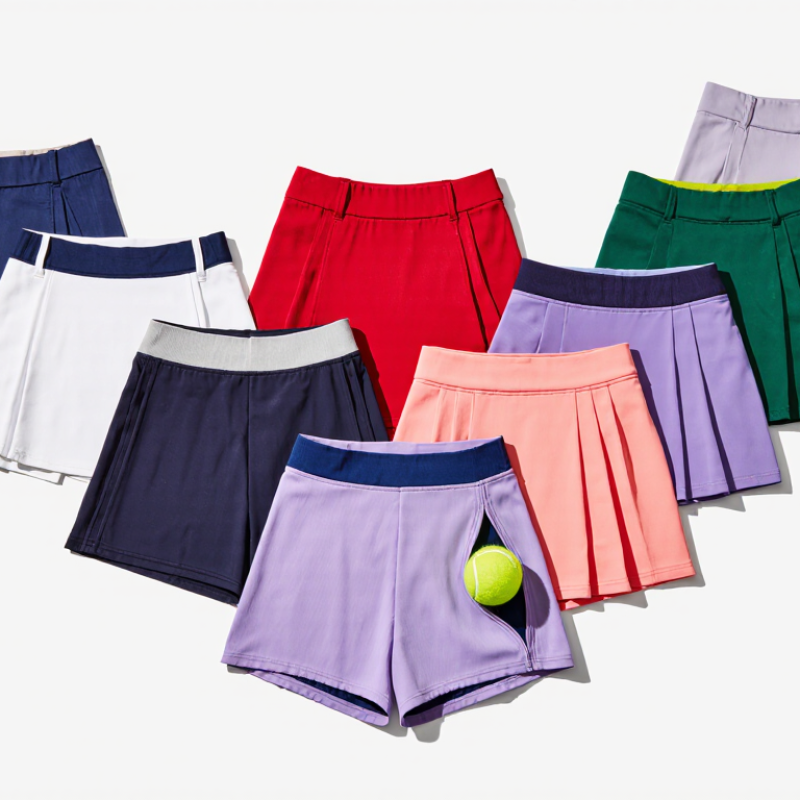
An 80/20 nylon–spandex tennis skirt contains 80% nylon and 20% spandex by fiber weight. A 90/10 blend contains 90% nylon and 10% spandex. That difference matters when comparing custom skirts for bulk orders, especially for fitted waistbands and inner shorts. More spandex can support greater stretch, but the percentage alone does not establish recovery or compression. Knit structure, fabric weight, and finishing also affect performance. Check the construction. Two fabrics with identical composition labels can feel surprisingly different during a lateral lunge.
For close-fitting inner shorts, an 80/20 blend may provide useful flexibility through the hips and thighs. A 90/10 blend may suit a pleated outer skirt when its construction provides adequate movement. Neither ratio guarantees opacity, breathability, or durability. Request samples in your intended colors, particularly white and pale shades. Stretch each sample over a contrasting surface to check coverage. Then test complete garments through squats, side steps, and seated positions. An opaque fabric swatch can still reveal stretched seams or visible pocket outlines.
For bulk purchasing, specify composition alongside fabric weight, measurement tolerances, and an agreed stretch-and-recovery test method. Test decoration too. Heat-applied logos require trials because unsuitable temperatures can damage stretch fabrics. Choosing 80/20 simply because it sounds more technical is tempting, but that shortcut deserves reconsideration. Compare samples after several wash cycles, recording waistband dimensions and surface changes. Keep an approved sample for checking production consistency.
Ten material and purchasing criteria for comparing custom tennis skirt fabrics. This table compares blend specifications rather than ranking individual products.
| Comparison Criterion | 80% Nylon / 20% Spandex | 90% Nylon / 10% Spandex | Bulk Order Verification |
|---|---|---|---|
| 1. Fiber Composition | Nominally contains 80 g of nylon and 20 g of spandex per 100 g of fabric. | Nominally contains 90 g of nylon and 10 g of spandex per 100 g of fabric. | Request a fiber-content report for the specified fabric. Confirm whether the skirt shell, inner shorts, and waistband use different materials. |
| 2. Spandex Proportion | Contains twice the spandex percentage of the 90/10 blend. | Contains half the spandex percentage of the 80/20 blend. | The 10-percentage-point difference does not establish a corresponding difference in stretch, compression, or comfort. |
| 3. Stretch Potential | Higher spandex content can support greater extensibility when other construction variables are comparable. | Can still provide substantial stretch, depending on yarn selection and fabric construction. | Specify required lengthwise and crosswise stretch. Test both fabrics using the same method, load, and conditioning. |
| 4. Recovery and Shape Retention | Spandex contributes elastic recovery, but 20% content alone does not guarantee better recovery. | Can provide effective recovery when yarn quality, construction, and heat setting are suitable. | Compare residual growth after repeated stretching and after laundering under the intended care conditions. |
| 5. Fit and Compression | Can be used for close-fitting inner shorts and stretch panels; compression also depends on fabric stiffness and garment dimensions. | Can be used for stretch skirt shells and inner shorts; the blend ratio alone does not determine fit. | Approve graded garment measurements and conduct movement fittings across the intended size range. |
| 6. Fabric Weight and Drape | No fixed fabric weight, thickness, or drape follows from the 80/20 composition. | No fixed fabric weight, thickness, or drape follows from the 90/10 composition. | Specify fabric mass in g/m² and approve physical samples for pleat definition, movement, and hand feel. |
| 7. Breathability and Moisture Management | Air permeability, wicking, and drying behavior depend on construction, thickness, and finishing. | A higher nylon percentage alone does not establish better breathability or faster drying. | Request comparable test results for the moisture-management properties relevant to the intended playing conditions. |
| 8. Opacity During Movement | Opacity can change as fabric stretches; the blend ratio does not establish coverage. | Opacity likewise depends on fabric density, thickness, color, and the degree of stretch. | Check each approved color during bending, lunging, and stretching, including inner-short coverage. |
| 9. Durability and Care | Nylon contributes abrasion resistance, while spandex requires care appropriate to its sensitivity to heat and chemical exposure. | The higher nylon proportion does not by itself guarantee longer garment life. | Assess abrasion, pilling, seam performance, dimensional change, and colorfastness. Approve care instructions for the finished garment. |
| 10. Cost and Order Consistency | The higher spandex proportion can affect material cost, but composition alone cannot establish a reliable price. | The lower spandex proportion does not guarantee a lower finished-garment price. | Compare quotations using the same fabric weight, construction, color, trims, size mix, quantity, and delivery terms. Approve production tolerances and a pre-production sample. |