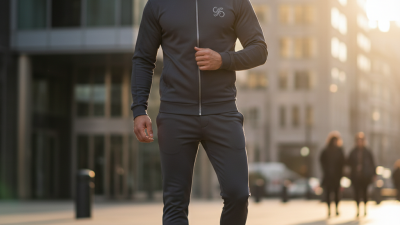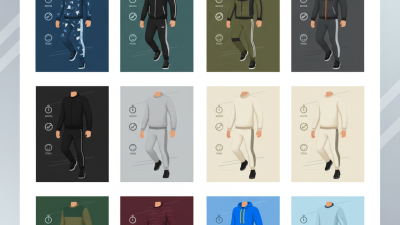
Sourcing a Custom Slim Fit Tracksuit requires more than choosing a narrow silhouette and adding a logo. Buyers must balance movement, comfort, fabric recovery, grading, and production consistency. A jacket may look sharp on a mannequin, yet pull across the shoulders during warm-ups. That small failure can damage repeat orders.
Grand View Research valued the global sports apparel market at approximately USD 203.26 billion in 2023. Its report forecasts a 6.7% compound annual growth rate from 2024 to 2030. Statista Consumer Market Insights also identifies sportswear as a large, expanding apparel category. However, these reports cover broad sportswear markets. They do not measure the Custom Slim Fit Tracksuit niche precisely. That limitation matters.
Matt Powell, a veteran sports-industry analyst and former NPD Group advisor, has stated, “The consumer is in control.” His point applies directly to custom apparel sourcing. Customers increasingly expect accurate fit, flexible fabrics, clear size charts, and responsible production evidence. Suppliers should therefore provide measurement samples, fabric composition, GSM details, wash testing, and documented quality checks.
A practical sourcing process starts with the wearer. Define the intended activity, climate, body profile, and retail price. Then test the sample during movement, not only while standing. A 5% pattern adjustment may improve comfort, but it can also change the visual balance. This is where many buying guides oversimplify the work. Real sourcing involves compromises, revisions, and occasional mistakes. The strongest supplier relationship makes those problems visible early, before bulk production begins.

How to Source Custom Slim Fit Tracksuits?
A reliable slim-fit tracksuit begins with measurable specifications, not a vague fashion reference. Set a fabric target between 180 and 240 GSM. This range can provide a clean silhouette without excessive weight. Choose the final GSM according to climate, activity, and garment structure. A 180 GSM polyester blend feels lighter for transitional weather. A 240 GSM knit offers more coverage and shape retention. Record fiber content, stretch percentage, shrinkage, and pilling requirements. These details help factories quote accurately and reduce sample changes.
Define the fit with a complete measurement chart. Include chest, waist, hip, shoulder, sleeve length, rise, inseam, and cuff opening. Slim does not mean restrictive. Add controlled ease around the shoulders and seat. Ask for a graded pattern across all sizes. Request a pre-production sample in the target fabric. Then wash it using the planned care method. Check whether the knees bag, seams twist, or the zipper pulls unevenly. My experience is that a sample may look sharp on a mannequin but feel tight during movement. That mistake is easy to miss.
Tips: Keep a fabric swatch library. Compare 180, 210, and 240 GSM under daylight. Rub the surface with a textured cloth. Inspect color transfer and fuzzing. Ask for test records, but verify key results independently. A useful improvement is adding a small stretch panel, although it may change the original appearance. Document every correction before bulk production.
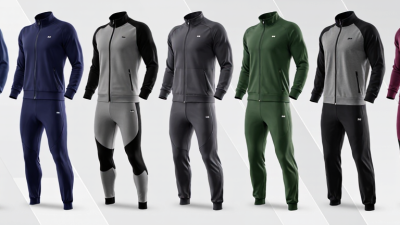
How to Source Custom Slim Fit Tracksuits?
Textile Exchange’s 2024 Materials Market Report states that polyester represented 57% of global fiber production in 2023. This share shows polyester’s strong role in performance apparel. For slim fit tracksuits, it offers durability, quick drying, and stable color. A practical starting point is a 92% polyester and 8% elastane blend. It supports stretch without making the fabric feel overly soft or loose. Recycled polyester can reduce dependence on virgin inputs, but suppliers should provide transaction records and fiber certification. Claims need evidence.
Request fabric swatches before approving bulk production. Test stretch recovery after repeated extension, not only after one fitting. AATCC 135 can help assess dimensional change after laundering, while AATCC 195 measures liquid moisture management. These tests reveal whether close-fitting trousers keep their shape. They also expose weak assumptions. A fabric may feel smooth but perform poorly under heat.
Tips: Ask for 180–240 gsm options for seasonal comparison. Check pilling after simulated abrasion. Review colorfastness against sweat and washing. Test the garment on sitting, walking, and bending models. Do not rely only on mannequin photographs. Fit can look sharp and still restrict movement. My practical preference is a medium-weight blend with moderate elastane, though this is not universal. Some buyers may need softer handfeel, while others value compression and recovery more. Record every test result in the sourcing brief.
The 57% figure is used as a market reference: polyester represented approximately 57% of global fiber production in Textile Exchange’s latest published material-market reporting. The blend options below are practical starting specifications for custom slim-fit tracksuits; final performance depends on yarn, knit structure, finishing, and testing.
| Blend option | Fiber composition | Suggested fabric construction | Indicative fabric weight | Functional profile | Best sourcing use | Key quality checks |
|---|---|---|---|---|---|---|
| A. Market-aligned performance | 57% polyester 35% cotton 8% elastane |
Cotton-rich stretch interlock or compact jersey | 220–280 g/m² | Balanced durability, moderate softness, good shape retention, and a comfortable stretch level for close-fitting silhouettes. | General-purpose slim-fit jackets, tapered trousers, and coordinated warm-up sets. | Check dimensional change after washing, seam recovery, spirality, colorfastness, and surface pilling. |
| B. Lightweight training | 88% polyester 12% elastane |
Warp knit, tricot, or lightweight interlock | 150–210 g/m² | Low moisture absorption, quick drying, strong color retention, and high freedom of movement. | Warm-weather training sets and slim athletic tracksuits requiring low bulk. | Test wicking or drying claims, snag resistance, opacity, chlorine resistance where relevant, and elastane recovery. |
| C. Soft everyday comfort | 60% cotton 35% polyester 5% elastane |
Cotton-rich stretch fleece or brushed-back jersey | 280–360 g/m² | Soft hand feel and higher comfort, with more moisture retention and potentially greater shrinkage than polyester-dominant options. | Lifestyle tracksuits, travel apparel, and cooler-season slim-fit sets. | Require pre-shrunk fabric, wash testing, pilling evaluation, fleece-surface consistency, and seam-torque inspection. |
| D. Recycled-content performance | 92% recycled polyester 8% elastane |
Double-knit interlock or compact performance jersey | 200–260 g/m² | Lightweight, durable, quick drying, and suitable for smooth branded graphics or tonal decoration. | Performance-led collections with a documented recycled-polyester requirement. | Request transaction documentation, recycled-content verification, colorfastness, pilling, stretch recovery, and wash durability. |
| E. High-stretch body fit | 74% nylon 26% elastane |
Power interlock, warp knit, or compression jersey | 220–300 g/m² | Very high stretch and recovery, smooth hand feel, and close body conformity; generally higher material cost. | Contoured trousers, fitted training tops, and fashion-forward slim silhouettes. | Measure four-way stretch, growth after repeated extension, bursting strength, seam slippage, and coverage at maximum stretch. |
Reference: Textile Exchange, Material Market Report, global fiber-production share data. Fabric-weight ranges and blend specifications are indicative development targets and should be validated against the intended garment design, end use, and applicable textile-testing standards.
How to Source Custom Slim Fit Tracksuits?
Sourcing custom slim fit tracksuits starts with practical supplier screening. Ask for the minimum order quantity, not only the sample price. A low MOQ may suit a small launch, but it can increase fabric costs and limit color options. Confirm whether the MOQ applies per style, color, or size range. Request a size set before production. Slim cuts can feel restrictive when grading is poor.
Capacity matters when demand grows. Ask how many tracksuits the factory completes each month. Check cutting tables, sewing lines, and quality inspection records during a video call or visit. A supplier may promise 10,000 pieces but lack enough trained operators. That gap becomes your delivery problem. Review recent production schedules and ask for a realistic monthly capacity for your fabric and design.
Tips: Request an ISO 9001 certificate and verify its validity, certified site, and scope. ISO 9001 shows a documented quality management system, not perfect garments. Ask how workers record measurements, seam defects, shrinkage, and final checks. A small pilot order can expose weak controls before larger commitments. Keep your tech pack clear, including fabric weight, zipper details, logo placement, and tolerance limits. I once treated capacity as a simple number; that was too optimistic. Seasonal delays, rework, and fabric shortages can change the calculation quickly.
Screen suppliers by minimum order quantity, monthly production capacity, and ISO 9001 certification readiness.
The chart uses practical sourcing-screening benchmarks rather than company or brand data. Confirm each supplier’s MOQ, verified monthly capacity, and current ISO 9001 certificate before placing an order.
A slim fit tracksuit must hold its shape after repeated washing. Start with a measured tech pack, not a sample photo. Record chest, waist, sleeve, inseam, and leg opening measurements.
Then approve a pilot sample using AATCC 150 for dimensional change after home laundering. Test before and after washing. A two-percent leg twist may look minor on paper. On a fitted garment, it can feel obvious.
Color performance needs equal attention. Use relevant ISO 105 methods for washing, rubbing, perspiration, and light exposure. The correct method depends on the fabric, dye, and intended use.
Ask the factory for test conditions, specimen photos, and grading results. Do not accept “colorfast” as proof.
Textile Exchange’s 2024 Materials Market Report estimated global fiber production at 124 million tonnes in 2023, with polyester representing 57%. That scale makes consistent quality control more important, especially for synthetic performance fabrics.
Tips:
Wash at least three sample pieces, not one. Measure flat garments with the same tools each time. Photograph cuffs, seams, and printed areas before testing.
Confirm whether the factory used the agreed wash temperature and drying method. Keep one unwashed control sample. A small mistake here can expose a larger process problem.
Recheck the waistband. It is often overlooked. Also, do not overpromise production stability from a single approved sample.
Repeat testing after bulk fabric arrives. Industry reports offer useful context, but physical evidence remains the stronger sourcing decision.
Sourcing custom slim fit tracksuits requires more than checking color and logos. The pre-shipment inspection must test fit, construction, and consistency. AQL 2.5 is commonly used for general apparel quality control. Under ISO 2859-1, the sample size depends on lot quantity and inspection level. Acceptance numbers also change with the sample size. AQL 2.5 does not mean every garment is perfect. It is a sampling method, not a guarantee.
For slim silhouettes, inspectors should measure chest, waist, sleeve length, rise, and inseam. A small measurement drift can create visible pulling around the shoulders or knees. They should also check fabric weight, stretch recovery, seam strength, zipper function, print placement, and color shading. Critical defects need separate treatment from major and minor defects. A recurring factory lesson is simple: unclear defect definitions create arguments after shipment. That part is often overlooked.
Tips: Approve a sealed reference sample before production. Attach a measurement chart with tolerances, such as ±1 cm for key points. Request inspection photos showing measuring tapes, carton labels, and random opened units. Review the factory’s internal inspection records, not only the final report. UNEP estimates that textiles create 2–8% of global greenhouse gas emissions, so preventing rework also supports better resource control. Still, AQL 2.5 may be too relaxed for highly fitted garments. Reconsider it when appearance and sizing carry higher commercial risk.